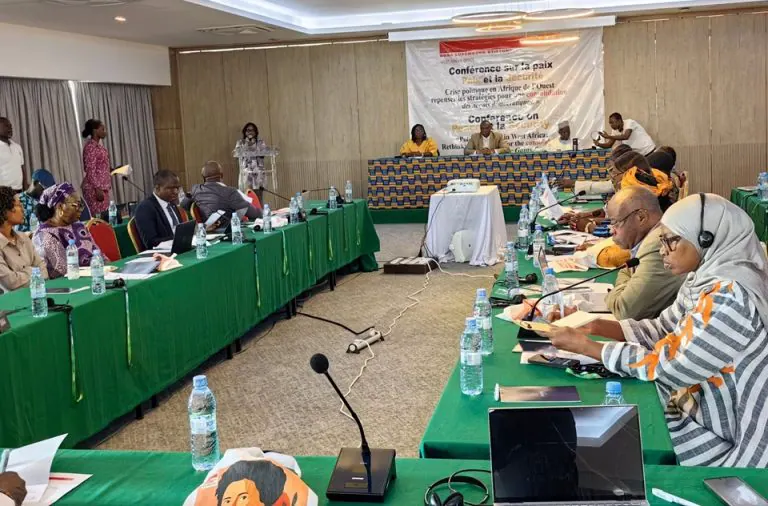
On September 23, 2026, experts, former diplomats, policymakers, and civil society actors convened in Abidjan, Côte d'Ivoire, to rethink democratic consolidation strategies in West Africa. The conference, organized by the Rosa Luxemburg Foundation, focuses on the theme "Political Crises in West Africa: Rethinking Strategies for Consolidating Democratic Gains." Participants are examining the root causes of instability, conditions for lasting peace, and regional integration prospects. This gathering is part of a broader reflection on political crises affecting several West African countries.
The conference brings together participants to discuss the complex crises in West Africa, including those in Burkina Faso, Mali, Guinea, and Guinea-Bissau. Professor Jibrin Ibrahim, a senior researcher at the Centre for Democracy and Development in Nigeria, emphasized that these crises cannot be analyzed solely from a sociopolitical perspective. He linked them to economic, historical, ecological, and geopolitical transformations, citing unfinished nation-building processes, persistent extractive economic models, climate change effects, and the reconfiguration of the global order.
According to Professor Ibrahim, the frequent coups in the Economic Community of West African States (ECOWAS) region can be seen as manifestations of deeper systemic crises. The discussions also focus on the future of regional integration, including the potential restructuring of ECOWAS and its relations with the Alliance of Sahel States (AES), comprising Burkina Faso, Mali, and Niger. Ibrahim stressed the need for greater popular involvement in security and resource governance, stating that democracy is crucial for people to control their future.
However, Ibrahim expressed reservations about the ability of military regimes to foster popular involvement, suggesting that they prioritize maintaining power and control. Colonel-major Mory Sylla, representing Côte d'Ivoire's Minister of Interior and Security, discussed the Malian army's experience in 2012, highlighting logistical challenges faced by forces engaged in conflict. He emphasized that a military's operational capacity depends on equipment and resources, as well as the importance of intelligence in asymmetric conflicts against terrorist groups.
Colonel-major Sylla noted that terrorist groups have organizational and planning capabilities that must be considered. He referenced the book "Management de la sauvagerie" by Abou Bakr Naji, a strategic document for understanding jihadist conceptions. The conference continues to explore political, economic, and security responses that could contribute to stability and democratic consolidation in the region.
The experts' discussions aim to provide a comprehensive understanding of the complex crises in West Africa and potential solutions. By examining the root causes of instability and the conditions for lasting peace, participants hope to identify effective strategies for consolidating democratic gains. The conference also seeks to promote regional integration and cooperation, essential for addressing the shared challenges facing West African countries.
The gathering in Abidjan underscores the need for a coordinated approach to addressing the multifaceted crises in West Africa. As the conference continues, participants are expected to share insights and recommendations for promoting stability, democracy, and regional integration in the region. The Rosa Luxemburg Foundation's initiative aims to contribute to a more nuanced understanding of the complex issues at play and to support the development of effective strategies for democratic consolidation.
Key points
- Experts call for rethinking democratic consolidation strategies in West Africa
- The conference focuses on the root causes of instability and conditions for lasting peace
- Participants emphasize the need for greater popular involvement in security and resource governance