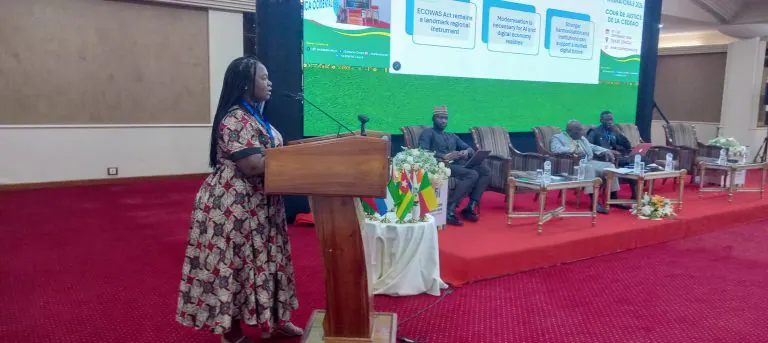
Dr. Janet Gbam, a digital governance expert, has called for the Economic Community of West African States (CEDEAO) to adapt its regional framework on personal data protection. Speaking at a conference in Dakar on September 22, 2026, Dr. Gbam emphasized that the 2010 Additional Act on personal data protection has limitations due to recent technological advancements. The rise of artificial intelligence, cloud computing, and social networks has created new issues that the current framework does not adequately address.
Dr. Gbam highlighted the absence of specific provisions on algorithmic governance, automated decision-making transparency, AI-related biases, and the right to data erasure. These gaps can increase surveillance, profiling, and fundamental rights infringement risks. She also noted disparities in implementing data protection rules among CEDEAO member states. Countries like Senegal, Ghana, Nigeria, and Cape Verde have made progress in legislation and data protection authorities, while others face institutional, technical, and financial constraints.
The expert cited notable cases, including Digital Rights Lawyers Initiative v. Nigeria, where Meta and WhatsApp were fined $220 million, and the Bolt Ghana identity theft case. These examples illustrate the challenges of applying data protection rules. Dr. Gbam referenced the 2014 Malabo Convention, the African Union's data policy framework, and the African Commission on Human and Peoples' Rights Resolution 620, which establish principles for data protection, human rights, and non-discrimination.
Dr. Gbam recommends impact assessments for algorithms on human rights, increased transparency in public AI systems, and the right to human explanation and review of automated decisions. She also suggests a risk-based approach, secure transborder data transfer mechanisms, and capacity building for national data protection authorities. According to Dr. Gbam, a thorough reform is necessary to address current challenges and support a safe and inclusive personal data protection system.
The CEDEAO framework must be adapted to the realities of the digital economy and the African Continental Free Trade Area (AfCFTA). Dr. Gbam's call for reform emphasizes the need for an updated framework that addresses emerging issues. This would enable CEDEAO member states to effectively protect personal data and promote a culture of digital responsibility.
The current framework's limitations hinder the effective protection of personal data in the region. Dr. Gbam's recommendations aim to strengthen data protection and promote a safe and inclusive digital environment. Her suggestions will contribute to ongoing discussions on adapting the CEDEAO framework to the challenges of the digital age.
The conference where Dr. Gbam made these remarks highlights the growing importance of digital governance in West Africa. As the region continues to navigate the complexities of the digital economy, experts like Dr. Gbam are advocating for robust frameworks that protect human rights and promote sustainable development. The outcome of these discussions will likely shape the future of data protection in the region.
Key points
- Dr. Janet Gbam calls for CEDEAO to adapt its data protection framework to address AI, transborder platforms, and digital economy challenges.
- The 2010 Additional Act on personal data protection has limitations due to recent technological advancements.
- Dr. Gbam recommends impact assessments for algorithms on human rights and increased transparency in public AI systems.