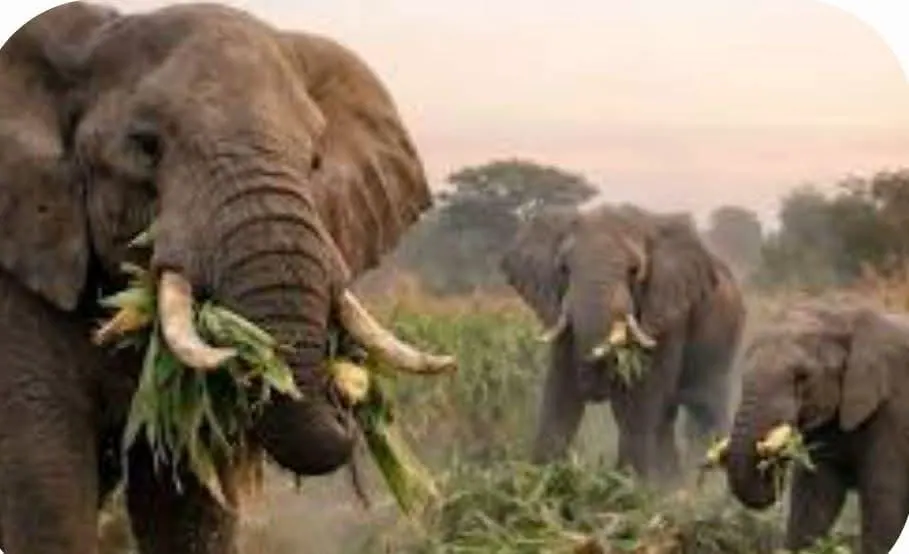
The town of Badikaha, located in the Hambol region of Côte d'Ivoire, is experiencing increased anxiety due to the frequent presence of elephants in local fields. These pachyderms have been causing significant damage to crops and posing a risk to the local population. The situation escalated on September 29, 2026, when a herd of elephants temporarily blocked traffic on National Highway A3 near the village of Kouroukouna.
The presence of elephants near this international axis forced travelers to halt their journey. In agricultural areas, several farmers have stopped visiting their fields due to fear of encountering the animals and having their crops destroyed. Zanga Ouattara, a 49-year-old farmer from Badikaha, expressed his concerns, stating that the risk of confronting elephants is too great, and he cannot protect his crops.
Yéo Ardjouma, a farmer in a nearby hamlet, warned that if the situation persists, many farmers may abandon their fields. He emphasized the need for a solution that protects both the local population and the elephants. The concerns of the farmers are shared by residents of the Sucrerie africaine en Côte d'Ivoire (SUCAF-CI 2) site 2 in Badikaha. The area has already experienced several incidents involving elephants.
On September 5, 2026, a farmer was seriously injured while attempting to chase an elephant away from his farm. He received treatment at the Badikaha CSU and was later evacuated to the Ferkessédougou CHR. The Ministry of Water and Forests confirmed the increase in human-elephant conflicts in various parts of the country, including Badikaha, in a communiqué released on September 27.
The ministry reminded the public that elephants are fully protected and advised against attempting to repel or provoke them. Instead, they recommended alerting the authorities and competent forest services. In response to the growing number of elephant incursions, the people of Badikaha are calling for increased surveillance, prevention, and security measures in exposed areas, particularly agricultural fields and transportation routes.
Beyond crop damage, farmers fear the economic consequences of abandoning their fields, as agriculture is a vital source of income and sustenance for many families. The local population is urging administrative authorities and technical services to strengthen prevention measures to reduce the risk of incidents while contributing to elephant conservation.
The situation in Badikaha highlights the need for a comprehensive approach to address the human-elephant conflict in Côte d'Ivoire. The authorities must balance the protection of human life and property with the conservation of these protected species. The people of Badikaha and surrounding areas hope for a swift resolution to this issue to ensure their safety and the preservation of their agricultural livelihoods.
Key points
- The Ministry of Water and Forests has confirmed the increase in human-elephant conflicts in various parts of Côte d'Ivoire, including Badikaha.
- Local farmers are calling for increased surveillance, prevention, and security measures to protect their fields and communities from elephant incursions.
- The situation in Badikaha highlights the need for a comprehensive approach to address the human-elephant conflict in Côte d'Ivoire.