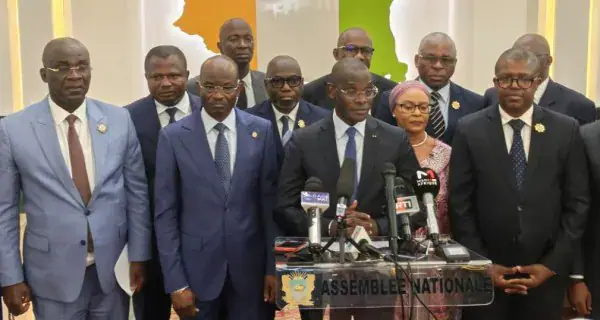
The government of Côte d'Ivoire has taken a significant step in reforming its electoral system by dissolving the Independent Electoral Commission (CEI). The decision was made through an ordinance, which was ratified by the National Assembly's Commission on General and Institutional Affairs (CAGI) on November 17, 2026. The CAGI, led by Dah Sansan Tilkouete, unanimously approved the ratification of the ordinance, marking a crucial step in reorganizing the country's electoral system.
The dissolution of the CEI, which had existed for 25 years, is a significant institutional change. The government has assured that consultations with political actors have already begun to gather their proposals and observations on the reform. Interior and Security Minister Vagondo Diomandé stated that the goal is to avoid delays in implementing the reform, as the electoral calendar requires swift action to establish a new mechanism for managing elections.
The government's decision to dissolve the CEI has sparked mixed reactions from various parliamentary groups. The PDCI-RDA group expressed reservations about the procedure used to dissolve the CEI, citing a lack of broad consultation with stakeholders. In contrast, the Agir group emphasized the need for guarantees to ensure the reliability of the electoral process, including the quality of the electoral file and the impartiality of the future institution.
The Solidarity group supported the ratification of the text but called for a limited transition period and the rapid adoption of a new electoral law to clarify the legal and institutional framework for future elections. These differing positions highlight a shared concern: ensuring that the dissolution of the CEI leads to a system that strengthens trust among political actors and citizens in the electoral process.
Minister Vagondo Diomandé has pledged to communicate the conclusions of the consultations with political actors to parliamentarians. This commitment suggests that the dialogue around the configuration, missions, and functioning of the future electoral organ will continue. The government aims to advance the reform while considering the concerns expressed by various political sensitivities.
The adoption of the bill in commission is an important step in the parliamentary process, but it does not close the debate on the future of electoral organization in Côte d'Ivoire. The composition of the future organ, its attributes, mode of operation, and guarantees of independence remain key questions that authorities must address precisely.
The credibility of the future electoral system and citizens' trust in institutions responsible for organizing elections are at stake. The government's ability to translate its commitments into concrete provisions that garner broad support will be crucial in determining the success of this reform.
Key points
- The government of Côte d'Ivoire has dissolved the Independent Electoral Commission (CEI) and initiated consultations with political actors to ensure a smooth transition.
- The dissolution of the CEI has sparked mixed reactions from parliamentary groups, highlighting concerns about the reliability and transparency of the future electoral process.
- The government aims to advance the electoral reform while addressing the concerns of various political stakeholders to strengthen trust in the electoral system.