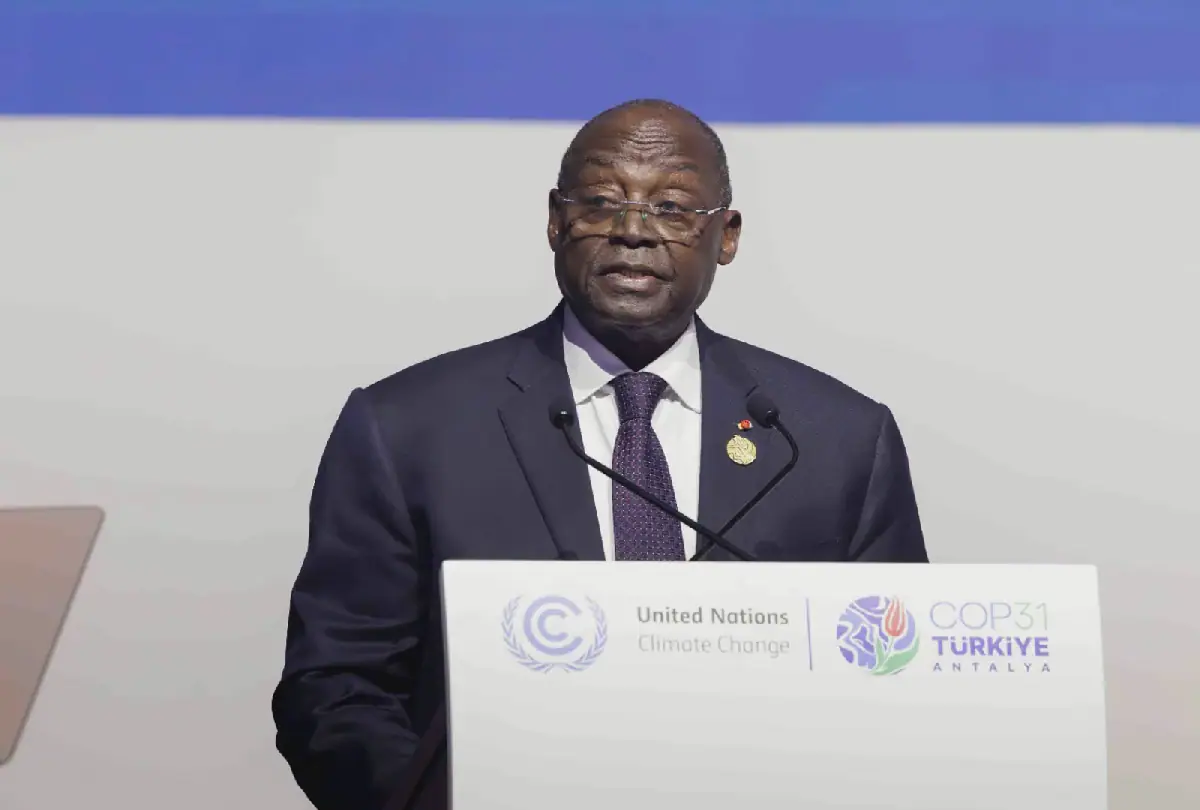
Côte d'Ivoire's Vice President, Tiémoko Meyliet Koné, represented President Alassane Ouattara at the high-level segment of COP31 in Antalya, Turkey, where he outlined the country's climate ambitions. Koné emphasized the need for concrete actions, effective investments, and strengthened international solidarity to address the climate crisis. He highlighted that Côte d'Ivoire aims to align its development trajectory with a dynamic of ecological transition.
Koné stressed that the consequences of climate change pose a significant threat to the economic and social development of states, particularly in Africa, which despite contributing little to global warming, bears the brunt of its effects. He cited irregular seasons, fragile harvests, decreased agricultural revenues, and threats to living conditions as examples of the challenges faced. The Vice President advocated for balancing ecological transition with legitimate development aspirations.
Côte d'Ivoire has adopted a new Nationally Determined Contribution (NDC) that targets a 33% reduction in greenhouse gas emissions by 2035. To achieve this goal, the country plans to diversify its energy mix by developing renewable energy sources, including hydroelectric power, biomass, and solar energy. Koné mentioned the launch of several new power plants that utilize these resources.
In addition to energy, preserving natural resources is a priority for Côte d'Ivoire. Koné highlighted initiatives to restore the country's forest cover and combat artisanal gold mining, which has severe environmental and health consequences. These efforts aim to reduce the country's carbon footprint and promote sustainable development.
Koné emphasized that realizing Africa's climate ambitions requires more than national efforts; financing is crucial. He noted that Côte d'Ivoire is exploring opportunities in the carbon market and has established a regional office for the Green Climate Fund in Abidjan to facilitate access to funding for environmental policies.
The Vice President called for strengthened international solidarity, based on respect for commitments, shared responsibilities, and genuine cooperation between states. He stressed that Africa's ecological transition must be accompanied by substantial financial resources.
Côte d'Ivoire's commitment to reducing greenhouse gas emissions and promoting sustainable development underscores the country's dedication to addressing the climate crisis. As the country continues to push for international cooperation and financing, it aims to balance its development goals with environmental protection.
Key points
- Côte d'Ivoire aims to reduce greenhouse gas emissions by 33% by 2035.
- The country plans to diversify its energy mix by developing renewable energy sources.
- Financing is crucial for Africa's climate ambitions, and Côte d'Ivoire is exploring opportunities in the carbon market.