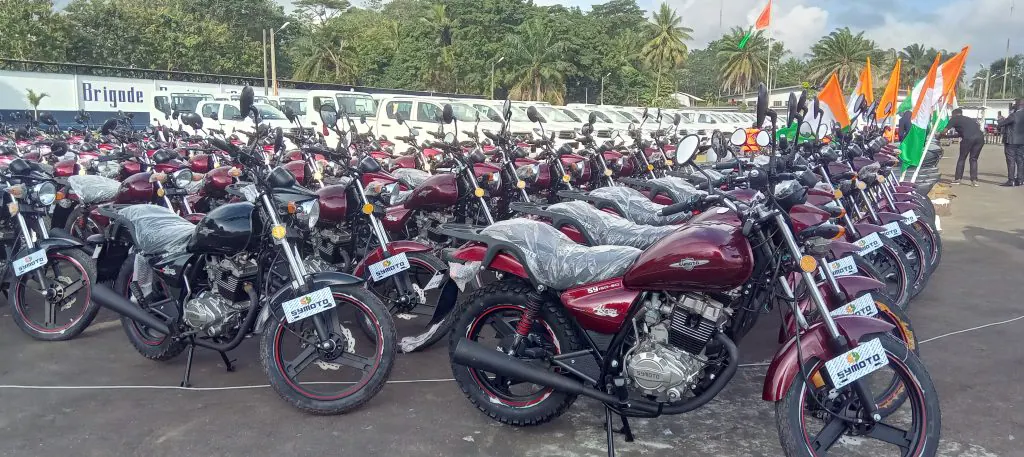
Côte d'Ivoire's Vice Prime Minister and Minister of Defense, Téné Birahima Ouattara, has handed over a significant shipment of vehicles, motorcycles, and drones to the country's security forces. The equipment, which includes 30 pick-up vehicles, 35 troop transport vehicles, 300 motorcycles, 12 zodiac boats, and drones, will be used to combat illegal gold mining. The security forces set to benefit from this equipment include local forces, the Special Group for the Fight Against Illegal Gold Mining (GSLOI), and the Special Brigade for Surveillance and Intervention (BSSI).
The equipment is part of a larger order placed by the National Security Council (CNS), which totals 48 pick-up vehicles, 40 troop transport vehicles, 360 motorcycles, 84 zodiac boats, 35 drones, and 10 GPS units. According to Ouattara, the goal of this acquisition is to enhance the operational capabilities of the security forces, ensuring the protection of the population, the country's territory, and its national resources. He emphasized that illegal gold mining is a "national concern" due to its impact on security, the environment, and national cohesion.
Ouattara also recalled the CNS's decision to impose a six-month moratorium on gold mining and reaffirmed the state's commitment to fighting the phenomenon while respecting the law and human rights. The Minister, Secretary Executive of the CNS, Fidèle Sarassoro, reported that the GSLOI has made significant progress, including the evacuation of over 1,000 sites, the prosecution of 4,665 individuals, and the seizure of 745 excavators and large quantities of gold. However, he noted a resurgence of clandestine activities, often facilitated by local complicity and external financing.
The CNS has adopted recommendations from a workshop held in Yamoussoukro, which include enhancing the capabilities of units engaged in the fight against illegal gold mining, improving intelligence, mobility, and coordination mechanisms. As part of the new strategy, prefects will play a central role in designing and planning operations with local forces and the support of GSLOI. The Prefect of the Indénié-Djuablin region, Kouadio Kouassi Eugène, highlighted the importance of prefects in the new setup.
General Touré Alexandre Apalo, Commander Superior of the National Gendarmerie, welcomed the reorganization and pledged that any security agent involved in corrupt activities or collaboration with illegal gold miners would face sanctions. The ceremony also saw a donation of fuel to the CNS from the Société pour le Développement Minier de la Côte d'Ivoire (SODEMI) as part of its social responsibility.
The handover ceremony marks a significant step in Côte d'Ivoire's efforts to combat illegal gold mining, a problem that has plagued the country for years. With the new equipment and strategy in place, the government hopes to make a lasting impact on the issue. The CNS and security forces are expected to work closely with local communities to address the root causes of illegal gold mining and ensure the long-term protection of the country's resources.
The fight against illegal gold mining is a priority for the Ivoirian government, which is seeking to balance economic development with environmental and social concerns. The success of this initiative will depend on the effective coordination of security forces, local authorities, and other stakeholders. Key to this effort will be the role of prefects in overseeing operations and ensuring that the new equipment is used effectively.
Key points
- The Ivoirian government has provided security forces with new equipment, including vehicles, motorcycles, and drones, to combat illegal gold mining.
- The equipment is part of a larger strategy to enhance the operational capabilities of security forces and protect the country's resources and population.
- The government has also adopted new recommendations to improve intelligence, mobility, and coordination mechanisms in the fight against illegal gold mining.