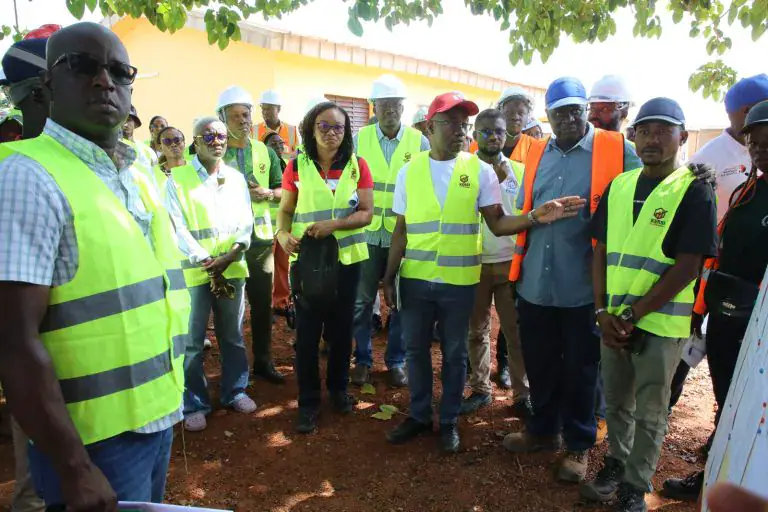
A joint mission by the World Bank and the Projet d'appui à la sécurité de l'eau et à l'assainissement (PASEA) has assessed the progress of latrine construction in Côte d'Ivoire's Poro and Hambol regions from November 9-16, 2026. The mission aimed to strengthen access to sanitation infrastructure in rural areas and combat open defecation. The team, comprising PASEA and ministry officials, evaluated the construction of latrines in several localities, including Kapélé, Kokaha, Timbé, and Kationon.
The mission was part of a pilot project to construct latrines for vulnerable households, rural health centers, and public primary schools. The project, implemented by the Ministry of Hydraulics, Sanitation, and Salubrity (MINHAS), is financed by the World Bank and managed by PASEA. On November 10, the delegation visited Kapélé and Kokaha to assess the construction of sanitation facilities at the public primary school and health center. The initiative was welcomed by local healthcare workers, who expect improved working conditions.
In the Hambol region, the delegation visited Timbé and Kationon to inspect the construction of sanitation facilities at schools and health centers. The team met with local authorities and assessed the progress of the project. Zié Coulibaly, environmental safeguard specialist at the Direction de l'Assainissement en milieu rural (DAR), highlighted the importance of the mission in ensuring the effectiveness of the operational framework for the project.
Lionel Tamané, civil engineer and operational civil manager at PASEA, emphasized the health and environmental benefits of the initiative. He explained that the construction of latrines will reduce open defecation and the risk of water resource contamination. The total cost of the project in the Poro region is estimated at 1.3 billion FCFA. The project aligns with the government's policy to strengthen sanitation in rural areas.
The PASEA project, which came into effect on September 18, 2024, has four components, including one dedicated to sanitation. The DAR is responsible for implementing the sub-component on constructing 40,000 rural latrines and promoting local participation in water, sanitation, and hygiene (WASH). The project aims to improve access to sanitation infrastructure and promote good hygiene practices in rural areas.
The joint mission by the World Bank and PASEA demonstrates the commitment of the Ivoirian government and its partners to address the challenges of sanitation in rural areas. The project is expected to have a positive impact on the health and well-being of local communities. The assessment mission has provided valuable insights into the progress of the project and identified areas for improvement.
The successful implementation of the project will depend on the collaboration of all stakeholders, including local authorities, communities, and project implementers. The World Bank and PASEA will continue to support the Ivoirian government in its efforts to strengthen sanitation infrastructure and promote good hygiene practices in rural areas. The project's outcomes will be closely monitored to ensure that it achieves its objectives and benefits the local population.
Key points
- The project aims to construct latrines in rural areas to combat open defecation and improve access to sanitation infrastructure.