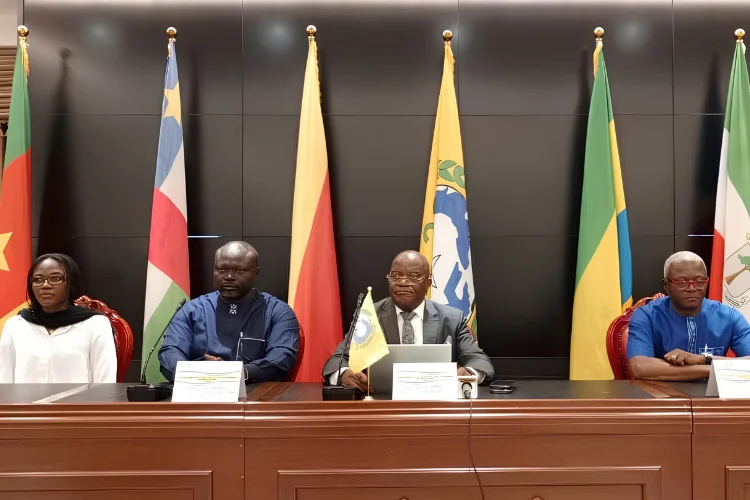
Experts from the Economic and Monetary Community of Central Africa (Cémac) gathered in Libreville from September 21 to 23, 2026, to establish a common framework for regional energy data. The meeting, held at the Hôtel Boulevard d'Acaé, focused on examining the draft regulation for the creation of a Community Energy Information System (SIE) and its roadmap. The goal is to improve data harmonization, which is currently lacking, and enhance the overall energy governance in the region.
The experts identified several challenges, including insufficient surveys, limited resources, and a lack of harmonized data. To address these issues, they recommended that Cémac member states allocate specific and sustainable budgets to their national SIE cells, equip them with permanent and qualified personnel, and mobilize necessary funding for quinquennial action plans. Strengthening the legal and institutional framework was also emphasized as crucial for the effective implementation of the SIE.
The Cémac is expected to play a key role in supporting the initiative by providing continuous training and capacity-building for national focal points. The experts also suggested rotating the host countries for community workshops to ensure a more inclusive and representative approach. According to Nicolas Beyeme Nguema, Cémac Commissioner, the system should provide "reliable, regular, harmonized, and accessible" data to support informed decision-making in the energy sector.
Armand-Colyn Abessolo Nkwele, Director Central of Statistics and Studies at the Gabonese Ministry of Universal Access to Water and Energy, highlighted the importance of the SIE in measuring energy production, demand, prices, and efficiency. The system will also enable the government to better understand the energy needs of households, administrations, commerce, agriculture, and industry, ultimately informing policy decisions.
The recommendations from the Libreville meeting will be submitted to the Energy Ministers, who will convene on September 25, 2026, at the Cité de la Démocratie. The ministers are expected to discuss and potentially adopt the proposed framework, which aims to enhance regional cooperation and data-driven decision-making in the energy sector.
The development of a robust energy data framework is seen as a critical step towards achieving a more integrated and sustainable energy system in the Cémac region. By improving data harmonization and availability, the region can better address its energy challenges, including ensuring access to reliable and affordable energy for all.
The Cémac's efforts to establish a common energy data framework reflect a broader commitment to regional cooperation and sustainable development. The successful implementation of the SIE will depend on the continued support and engagement of member states, as well as the effective allocation of resources and capacities.
Key points
- Cémac experts convene in Libreville to develop a common framework for regional energy data.