The Communauté économique des États de l’Afrique de l’Ouest (Cédéao) has relaunched its process to create a single currency, with the goal of introducing the Eco by 2027. At a meeting in Abidjan, Côte d’Ivoire, on November 20, 2026, members of the Presidential Task Force Ministerial Committee called for decisive action to achieve this objective. The plan involves a gradual rollout of the Eco, contingent on strengthening political consensus, accelerating economic reforms, and finalizing necessary institutional mechanisms.
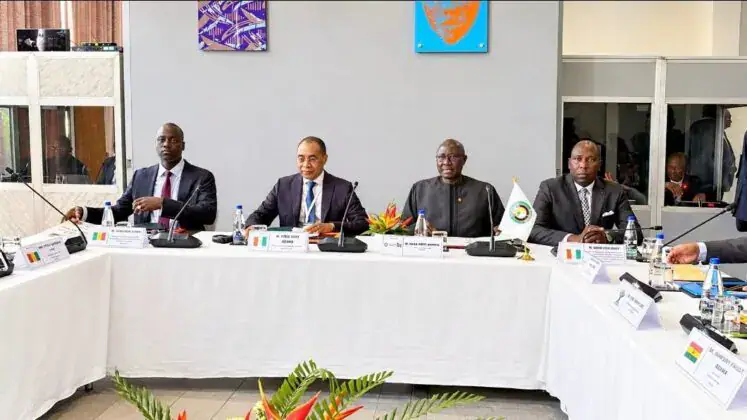
The sixth meeting of the Ministerial Committee was chaired by Adama Coulibaly, Ivorian Minister of Economy, Finance, and Budget. General Birame Diop, President of the Cédéao Commission, also attended the meeting and reaffirmed the Commission's commitment to accelerating regional monetary integration. The participants examined the key conditions required for the progressive and inclusive implementation of the Eco, focusing on consolidating political consensus, accelerating macroeconomic and structural reforms, and completing institutional and operational arrangements.
To move forward with the project, Cédéao member states must address three priorities. First, they need to solidify their political consensus around the project. Second, they must accelerate macroeconomic and structural reforms. Finally, they must finalize the institutional and operational frameworks necessary for launching the common currency. These steps are crucial for bringing West African economies closer together and facilitating trade, reducing transaction costs, and strengthening regional economic integration.
The introduction of the Eco aims to promote economic integration and cooperation among Cédéao member states. However, its implementation requires close coordination between governments, as well as durable convergence of economic and monetary policies. A significant challenge for this community ambition is the economic divergence between member countries. The Ministerial Committee has urged states to make decisive decisions to accelerate preparations for a gradual launch of the Eco by 2027.
The Cédéao Commission is committed to accelerating regional monetary integration, and the introduction of the Eco is a key aspect of this effort. The Commission's president emphasized the need for decisive action to achieve this goal. The meeting in Abidjan marked a significant step towards realizing the Eco project, which has been on the Cédéao agenda for several years. The success of this project depends on the ability of member states to translate their political commitments into concrete measures.
The launch of the Eco would have significant implications for West African economies, facilitating trade and investment, and promoting economic growth and development. However, its implementation requires careful planning and coordination to ensure a smooth transition to a single currency. Cédéao member states must work together to address the challenges and opportunities associated with the Eco project.
The Cédéao Commission will continue to play a key role in promoting regional economic integration and monitoring the implementation of the Eco project. The introduction of the Eco by 2027 is a challenging but achievable goal, and its success will depend on the commitment and cooperation of Cédéao member states.
Key points
- Cédéao aims to introduce the Eco single currency by 2027 to facilitate trade and economic integration among member states.
Reporting sources
- Monnaie unique : la Cédéao vise l’Eco dès 2027 · Le Matinal