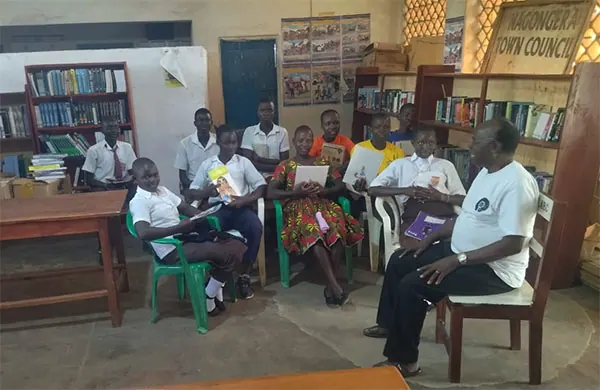
In Nagongera, Tororo District, a gathering of local residents, elders, and researchers recently convened to discuss a new community project, marking a significant milestone in the implementation of Neocomplexity Philosophy. This initiative, spearheaded by Solomon Ochwo-Oburu from Busitema University's Department of Education, seeks to challenge Eurocentric foundations of modern pedagogy. Ochwo-Oburu's work has been recognized nationally, earning him the National Independence Diamond Jubilee Medal from President Yoweri Museveni.
Ochwo-Oburu's Neocomplexity Philosophy, introduced in his 2020 essay published by Politeknik International, argues that traditional Western complexity theories are incomplete. He expanded the scope to human society, positing that reality is a stratified matrix of socio-scientific, socio-cultural, and socio-political systems. This epistemology redefines what it means to "know," emphasizing that knowledge is a tool to fulfil a human and cosmic mission. He also introduced the concept of a "dual toolkit," comprising the Visible Toolkit and the Invisible Toolkit.
The Visible Toolkit consists of physical senses used to observe the material world, while the Invisible Toolkit comprises internal attitudes, aspirations, cultural values, and communal intentions. Ochwo-Oburu describes the earth as a stadium of work, not a picnic parlor. He warned that modern institutions must "network or die," as fragmented mindsets inherited from 19th and 20th-century ideologies are unequipped to handle chaotic, interconnected crises.
Ochwo-Oburu's work has gained international attention, with his poetry book "I Feel African in Every Vein" being used in the United States and West Africa. Academic collaborations, including Fulbright research initiatives, have begun to digitally preserve his extensive physical archives. This includes his philosophical treatises and cultural research into the history and oral traditions of the Jopadhola cultural institution.
The Nagongera Community Library is a key project in Ochwo-Oburu's philosophical praxis. Designed to democratize access to knowledge, the library will serve as a dynamic cultural hub, coexisting modern digital tools with local oral histories. This project seeks to bridge the gap between the corporeal and intelligible realms, providing a physical repository of knowledge in a rural sub-county.
As Uganda debates curriculum reforms and the decolonization of its education system, Ochwo-Oburu's Neocomplexity Philosophy offers a timely blueprint. It suggests that the answer to Uganda's educational challenges lies in recognizing the complex, interconnected matrix of the modern world and equipping young Ugandans with both scientific and cultural tools to navigate it.
The implementation of Neocomplexity Philosophy in Nagongera demonstrates that philosophy in Uganda is not a dead language spoken only in lecture halls—it is a living, breathing network building the foundations of rural empowerment. Ochwo-Oburu's work continues to inspire a new generation of scholars and community leaders, fostering a culture of inclusivity and equity in education.
Key points
- Solomon Ochwo-Oburu's Neocomplexity Philosophy aims to bridge gaps in 21st-century education through community projects in Eastern Uganda.
- The Nagongera Community Library is a key project in Ochwo-Oburu's philosophical praxis, designed to democratize access to knowledge.
- Ochwo-Oburu's work has gained international attention, with his poetry book being used in the United States and West Africa.