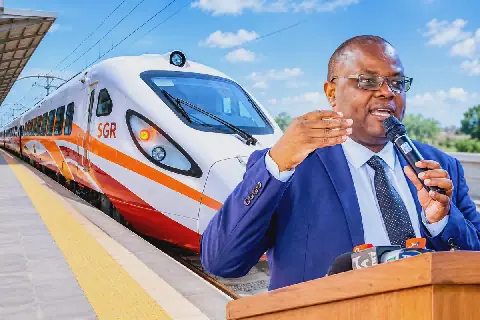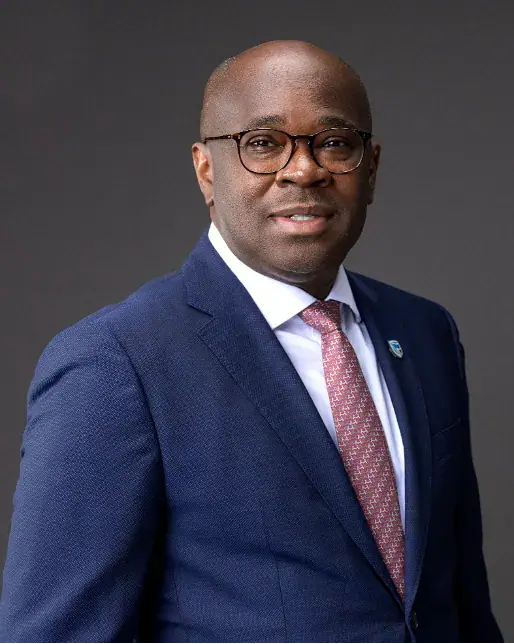
The Chief Executive of Stanbic Bank, Kwamina Asomaning, has called on businesses to demand more value from their banking relationships. He made this statement in light of the current economic pressures and increasingly complex supply chains that are reshaping the corporate landscape. Asomaning believes that businesses should push their banks to contribute more to their growth, resilience, and decision-making.
Asomaning's comments come at a time when businesses in Ghana are facing various challenges. The country's year-on-year inflation rate rose to 5.5 percent in October, up from 5.2 percent in September, due to rising transport and housing costs. This has intensified price pressures for the third consecutive month, according to the Ghana Statistical Service. Businesses are therefore looking for ways to navigate these challenges and ensure their growth and sustainability.
The Stanbic Bank CEO's statement is also significant in the context of the country's banking sector. OmniBSIC Bank, for instance, has recently been named Marketing-Oriented Bank of the Year at the 37th Chartered Institute of Marketing, Ghana National Marketing Performance Awards. This recognition highlights the importance of banks providing value-added services to their customers.
Furthermore, the issue of financing for businesses, particularly youth-owned businesses, is a pressing concern. Financing constraints, stringent contract requirements, and complex licensing procedures are impeding the participation of young businesses in Ghana's US$10.8 billion renewable energy investment programme. This programme aims to promote sustainable energy solutions in the country.
In other news, Zoomlion Ghana Limited, a subsidiary of the Jospong Group of Companies, has partnered with the government of Guinea to provide waste management services. The Prime Minister of Guinea, Amadou Oury Bah, has described this partnership as a continuation of the historic brotherhood between the two countries.
The issue of nuclear power is also being discussed in Ghana. Russia's proposed partnership with Ghana to develop a 2,000-megawatt nuclear power plant has raised questions about the country's existing nuclear technology engagements, project financing, and readiness to undertake such an investment. This development could potentially reshape Ghana's electricity sector.
Finally, the mining sector in Ghana is facing challenges related to financing and local content. The government's drive to deepen indigenous participation in the mining industry is being hindered by local contractors' struggles to secure capital needed to compete for mining contracts. This comes as authorities pursue reforms aimed at strengthening local content in the sector.
Key points
- Businesses must push banks to contribute more to their growth, resilience, and decision-making.
- Ghana's year-on-year inflation rate rose to 5.5 percent in October due to rising transport and housing costs.
- The country's mining sector faces financing challenges for local contractors.