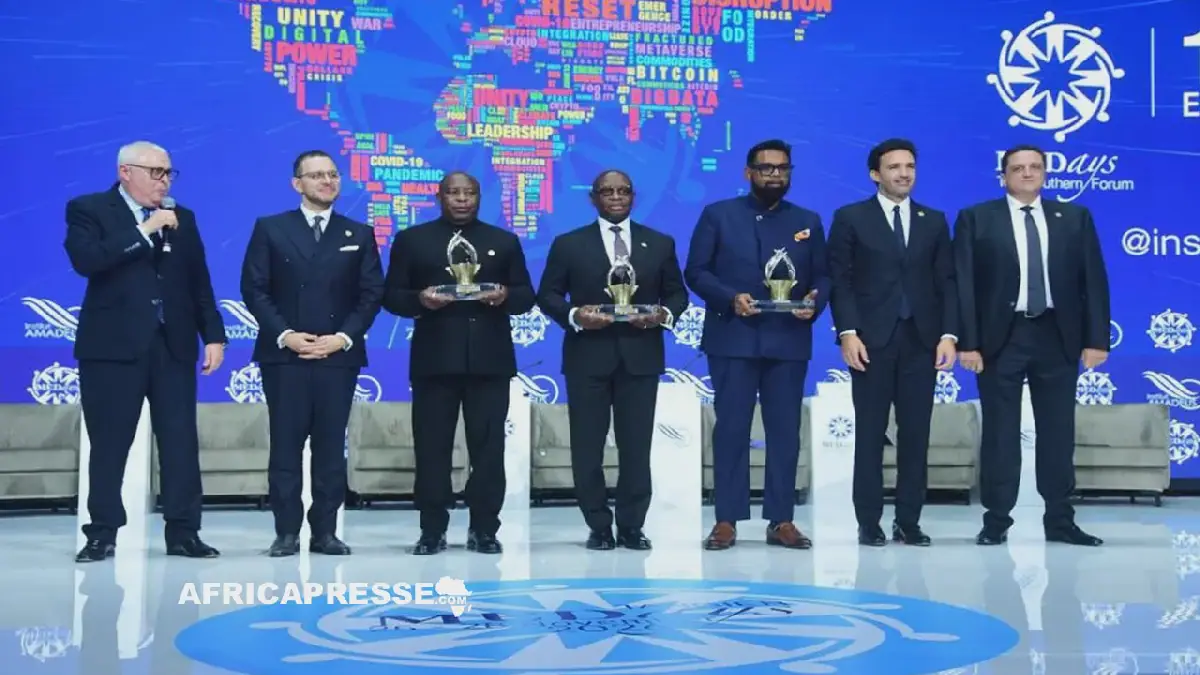
At the 18th edition of the Forum MEDays in Tangier, Burundian President Évariste Ndayishimiye, also the current chair of the African Union, called for a radical shift in Africa's economic model. He advocated for a continent that locally transforms its resources and engages in equal partnerships with other nations. This appeal was made under the theme "Fragmented World: Time for Choices," reflecting the complexities of the current international landscape. President Ndayishimiye emphasized the need for Africa to move beyond exporting raw materials and instead become a producer, transformer, and innovator.
President Ndayishimiye set clear conditions for international cooperation, stating that partnerships can only be considered mutually beneficial if both parties share the value-added benefits. He stressed the importance of local resource transformation, technology transfer, and job creation for young Africans. This economic agenda is coupled with a political requirement: negotiating as equals, respecting each nation's choices, and rejecting external pressures and imposed models. He also invited Southern countries to share experiences, invest in each other, and enhance exchanges.
The Forum MEDays, organized by the Amadeus Institute, annually brings together policymakers and economic leaders from the Global South and North. This year's edition highlights the uncertainties surrounding the multilateral order. Africa, rich in natural resources and boasting a dynamic youth population, remains dependent on food imports and the export of raw materials. President Ndayishimiye aims to change this narrative into a political agenda. His proposals outline several key projects, including energy, technology, and food security.
On energy, President Ndayishimiye emphasized that no nation can achieve true independence without controlled energy supplies. Recent crises have exposed the vulnerability of economies dependent on external shocks. In technology, he encouraged Africa to participate in the artificial intelligence revolution rather than merely suffering its consequences. However, he warned against the concentration of capabilities that could exacerbate the digital divide. His strategy involves investing in education, science, research, and digital infrastructure, along with responsible and inclusive governance.
The Burundian president highlighted Africa's food paradox: despite having arable land, water resources, and a workforce, the continent is heavily reliant on imports. He recommended modernizing farms, developing irrigation, storage, and processing, and strengthening intra-African trade. On climate change, he demanded that international commitments translate into effective, accessible, and predictable financing. He noted that Africa contributes little to global emissions but suffers significantly from climate-related phenomena.
President Ndayishimiye also addressed migration, taking a firm stance. He refused to view mobility as a threat, citing young people risking their lives at sea and professionals like doctors, engineers, and researchers being attracted to developed countries. He rejected a system that deprives Africa of its skills without compensation. Instead, he advocated for agreements based on circular mobility, knowledge transfer, and co-development.
In the face of international fragmentation, President Ndayishimiye called for enhanced dialogue and a more equitable and representative multilateralism. He concluded that true sovereignty is built through work, production, and resource transformation, as well as institutions that meet the aspirations of the population. This comprehensive approach aims to empower Africa to take control of its destiny and foster a more balanced global order.
Key points
- President Ndayishimiye calls for Africa to transform local resources and negotiate equally with partners.
- He advocates for a shift from exporting raw materials to becoming a producer, transformer, and innovator.
- The Burundian president emphasizes the need for controlled energy supplies, participation in the AI revolution, and modernized agriculture to achieve African sovereignty.