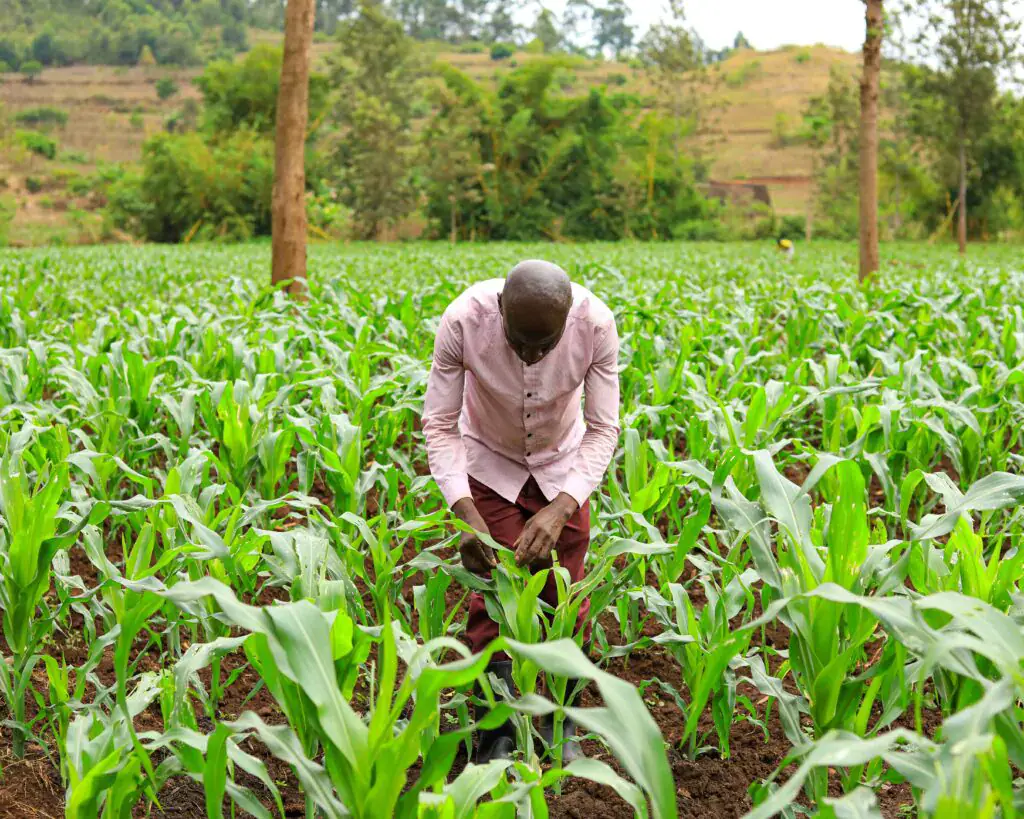
In central Burundi, farmers like Evariste Gasunzu are adopting a new approach to fertilizing their crops. With mineral fertilizers in short supply, Gasunzu has turned to making his own compost from grass, banana stalks, and manure. This method has not only helped him improve his harvests but also reduced his reliance on expensive fertilizers. Gasunzu's farm, which spans five hectares, includes two hectares of maize, two hectares of beans, and one hectare of vegetables.
Gasunzu's composting process involves gathering straw and dry grass, which he mixes with other plant matter and animal manure. He also uses tithonia, a nutrient-rich shrub, to speed up decomposition and enrich the compost with nutrients. The process requires careful attention, including regular turning and monitoring of the mixture. Gasunzu's efforts have paid off, with his maize yield increasing to between 4 and 4.6 tonnes per hectare, up from 1-2 tonnes previously.
Marie Josée Niyinyitoreye, a 37-year-old farmer and mother of four, has also adopted composting as a way to improve her harvests. After discovering the potential of tithonia in producing organic compost, she began sharing her method with other community members. Her recipe involves mixing dry grass, green grass, tithonia, and well-rotted manure to create a nutrient-rich compost. Niyinyitoreye's experiment with tithonia has shown promising results, with her vegetables showing remarkable growth.
Agronomic trials carried out in Burundi have confirmed the benefits of using compost and tithonia in farming. The trials indicate that ploughing tithonia into the soil and using compost can significantly increase maize yields compared to using tithonia liquid manure. However, the results depend on factors such as soil type, preparation conditions, and dosage. Ildéphonse Nimbesha, an assistant agronomist, recognizes the benefits of compost but warns that it may not automatically replace mineral fertilizers, especially in cases of severely depleted soils or high nutrient requirements.
The shortage of mineral fertilizers in Burundi has led to a significant increase in demand for alternative solutions. Prime Minister Nestor Ntahontuye acknowledged the shortage during a public broadcast in June 2026, stating that farmers were no longer receiving sufficient quantities of fertilizer. The government has been working to address the issue, but farmers like Gasunzu and Niyinyitoreye are finding innovative solutions to improve their harvests.
The economic benefits of composting are also significant. Gasunzu estimates that he saves around 1,150,000 Burundian francs (approximately 385 USD) per growing season by making his own compost. This reduction in expenses has helped him maintain his farm's productivity despite the fertilizer shortage. As more farmers adopt composting, the demand for mineral fertilizers is likely to decrease, providing a sustainable solution to the country's fertilizer crisis.
As Burundian farmers continue to face challenges in accessing mineral fertilizers, innovative solutions like composting are becoming increasingly important. With the support of organizations like the Burundi Institute of Agricultural Sciences (ISABU), farmers are learning new techniques to improve their harvests and reduce their reliance on expensive fertilizers. By adopting sustainable farming practices, Burundian farmers are working towards a more food-secure future.
Key points
- Burundian farmers are turning to homemade compost to improve soil fertility and crop yields due to a shortage of mineral fertilizers.