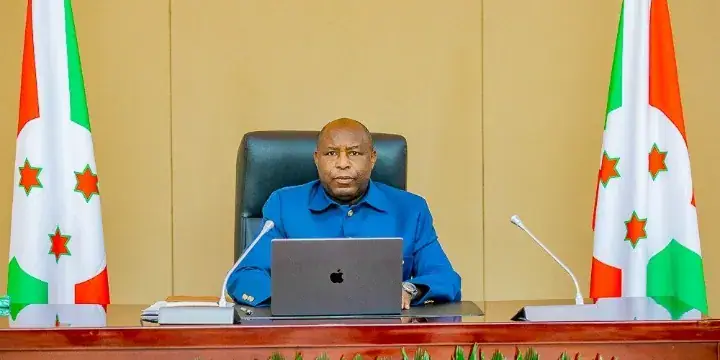
Burundi is preparing for its presidential elections, scheduled to take place on May 3rd, 2027. President Evariste Ndayishimiye has signed an order announcing the elections schedule, as per Decree No. 100/167 of November 4, 2026. The decree was signed in Gitega and outlines the voting procedures, timetable for submitting candidacies, and provisions for the participation of the diaspora and Burundian military personnel on missions abroad.
The presidential elections will be held by universal direct suffrage and secret ballot, in accordance with Article 56 of the Electoral Code. The President of the Republic will be elected by a single-member two-round ballot. To be elected in the first round, a candidate must obtain an absolute majority of the votes cast, i.e., 50% of the votes plus one. If no candidate achieves this, a second round is scheduled to take place on June 1st, 2027.
Aspiring presidential candidates are required to submit their candidature to the Independent National Electoral Commission (CENI) from November 13 to 22, 2026. The decree specifies that no coalition of independents is permitted. An independent candidate is considered to be any candidate who has not claimed affiliation with any political party for at least one year and who asserts independence from the usual political divisions by presenting a personal societal project.
The election decree provides detailed guidelines for the electoral process. It outlines the procedures for voting, the eligibility criteria for candidates, and the participation of special groups such as the diaspora and military personnel. The CENI will play a crucial role in ensuring the smooth conduct of the elections.
Burundian citizens will have the opportunity to choose their president through a democratic process. The elections are expected to be a significant event in the country's political calendar. The government has put in place measures to ensure the integrity and transparency of the electoral process.
The presidential elections are a critical milestone in Burundi's democratic journey. The country has made progress in consolidating its democratic institutions, and the elections are expected to demonstrate the maturity of its democratic processes. The international community is likely to be watching the elections closely.
The elections will be a test of Burundi's commitment to democracy and the rule of law. The country has faced challenges in the past, but the upcoming elections offer an opportunity for the government to demonstrate its commitment to democratic principles. The outcome of the elections will be closely watched by both domestic and international observers.
Key points
- The first round of voting is scheduled for May 3rd, 2027, with a possible second round on June 1st, 2027.
- Aspiring presidential candidates must submit their candidature to the Independent National Electoral Commission (CENI) from November 13 to 22, 2026.
- To be elected in the first round, a candidate must obtain an absolute majority of the votes cast, i.e., 50% of the votes plus one.