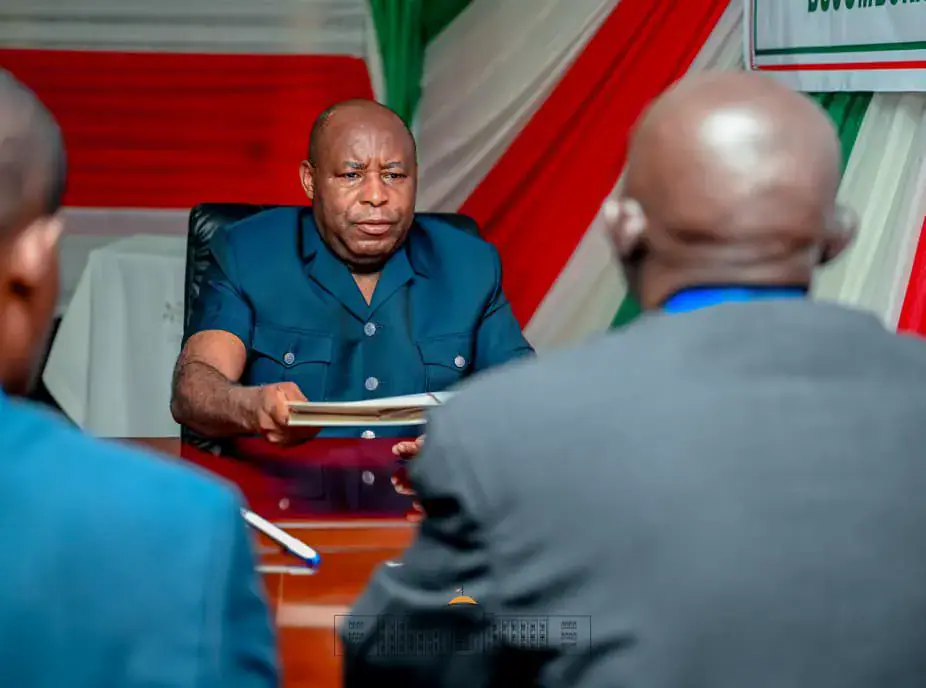
Burundian President Évariste Ndayishimiye has formally launched his bid for a second seven-year term in the 2027 presidential election. He submitted his candidacy to the Independent National Electoral Commission on November 13, 2026. Ndayishimiye is backed by his ruling party, the CNDD-FDD, and 11 other political parties. His re-election campaign comes amid growing scrutiny of Burundi's political landscape and opposition challenges.
Ndayishimiye's re-election bid is supported by a coalition of 12 political parties, including RADEBU, KAZE-FDD, and MSP-INKINZO. The parties cited his commitment to national sovereignty, security, and good governance as reasons for their endorsement. They also praised his efforts to preserve the political legacies of independence leader Prince Louis Rwagasore and democracy advocate Melchior Ndadaye.
The CNDD-FDD has dominated Burundian politics since 2005 and has emerged as the most powerful force in the country's electoral landscape. The party captured all 100 directly elected seats in the National Assembly in the June 2025 legislative elections. This has raised concerns among opposition figures about the limited opportunities for meaningful political competition.
Despite the incumbent's commanding position, several challengers are expected to contest the presidency. Abel Gashatsi of the historic UPRONA party has submitted his candidacy, while other political figures have expressed interest in contesting the presidency. However, the opposition enters the electoral period weakened by internal divisions and institutional challenges.
The opposition faces significant challenges, including access to political space and confidence in the independence of electoral institutions. Agathon Rwasa, a veteran opposition politician, has been affected by leadership disputes within the National Congress for Liberty. The historic FRODEBU party has also indicated that it will not field a presidential candidate, citing concerns about electoral transparency.
Ndayishimiye's campaign will unfold against significant economic challenges, including persistent poverty and foreign-exchange shortages. According to the World Bank, Burundi's economy grew by 4.2 percent in 2025. The president has called on Burundians to maintain peace and security throughout the electoral period while continuing economic and development activities.
The 2027 presidential election is scheduled for May 3, 2027. Ndayishimiye has expressed hope that the elections will take place peacefully and demonstrate Burundi's democratic credentials and national unity. He has linked this ambition to the country's long-term development strategy, which seeks to make Burundi an emerging economy by 2040 and a developed country by 2060.
Key points
- President Évariste Ndayishimiye submits candidacy for 2027 Burundian presidential election
- Ndayishimiye's re-election bid is supported by a coalition of 12 political parties
- The opposition faces significant challenges, including access to political space and confidence in electoral institutions