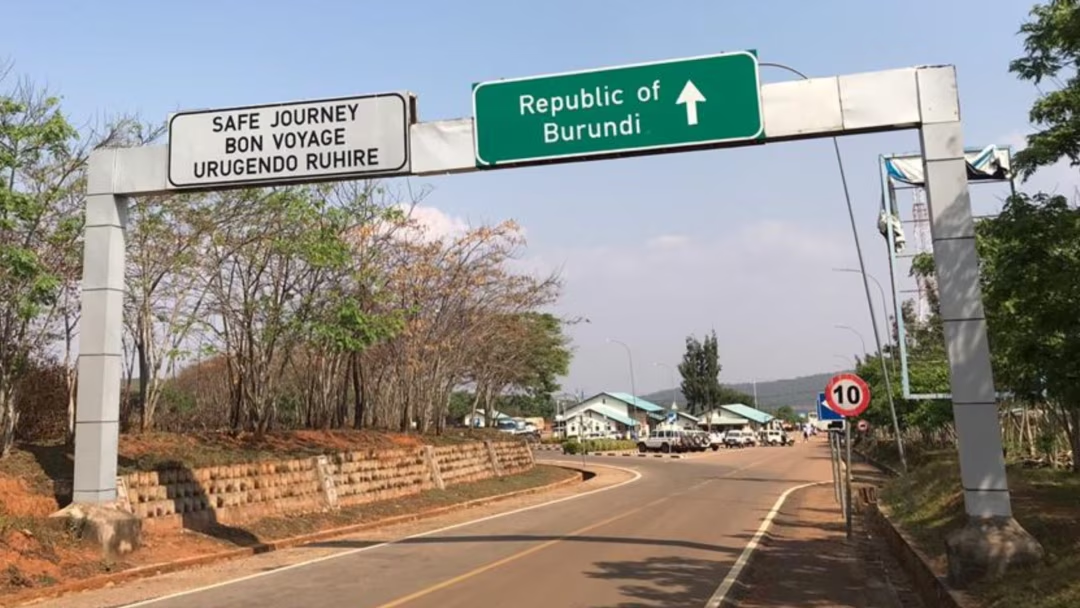
Burundi is quietly importing significant amounts of goods from Rwanda, despite closing their common land border in January 2024. According to the National Institute of Statistics of Rwanda, Rwanda's domestic exports to Burundi reached $13.39 million in the second quarter of 2026, more than double the $6.55 million recorded in the first quarter. This trade is relatively small for Rwanda but significant within its regional markets.
The trade between Rwanda and Burundi is largely driven by everyday consumption and construction needs. Rwandan exports to Burundi include maize, maize flour, wheat flour, cassava flour, potatoes, milk and dairy products, eggs, and vegetables. Manufactured and industrial products such as cement, steel, plastics, soaps, detergents, beverages, glassware, electrical equipment, and other construction materials are also being exported.
Rwanda serves Burundi not only as a source of locally produced goods but also as a gateway to products originating elsewhere. The trade includes re-exports, which are products Rwanda imports from other countries and subsequently supplies to Burundi, including mineral fuels, lubricants, and manufactured goods sourced from markets such as China and the United Arab Emirates.
The border closure was a result of Burundi accusing Rwanda of supporting the armed group RED-Tabara, which claimed responsibility for a December 2023 attack in Burundi. Rwanda has dismissed the accusation and criticized the border closure as a unilateral decision that undermined regional integration. The dispute has continued, with President Évariste Ndayishimiye describing Rwanda as a hostile country.
Burundi is facing serious foreign-exchange and supply constraints, making access to nearby suppliers commercially important. The International Monetary Fund reported that Burundi's international reserves stood at approximately $214 million, equivalent to only 1.6 months of imports. Fuel supplies have also been under pressure, with petrol and diesel deliveries falling well below estimated national requirements.
The trade relationship between Rwanda and Burundi is largely one-sided, with Rwanda selling considerably more to Burundi than it buys from it. Burundi does not feature among Rwanda's major suppliers, and the $13.39 million figure has different meanings for the two countries. For Rwanda, it represents only a small fraction of its quarterly export total, while for Burundi, the purchases provide access to food and manufactured products at a time when foreign exchange is scarce.
This is not the first time the two countries have experienced a disruption in trade. After Burundi closed its border with Rwanda in 2015, Rwandan exports to Burundi fell sharply, but trade recovered after the border reopened in October 2022. The latest figures show that the deterioration in political relations has not eliminated commercial demand, with Rwanda becoming an increasingly important source of regional supplies for Burundi.
Key points
- Burundi's imports from Rwanda reached $13.39 million in the second quarter of 2026.
- The trade between Rwanda and Burundi is driven by everyday consumption and construction needs.
- Burundi is facing serious foreign-exchange and supply constraints, making access to nearby suppliers commercially important.