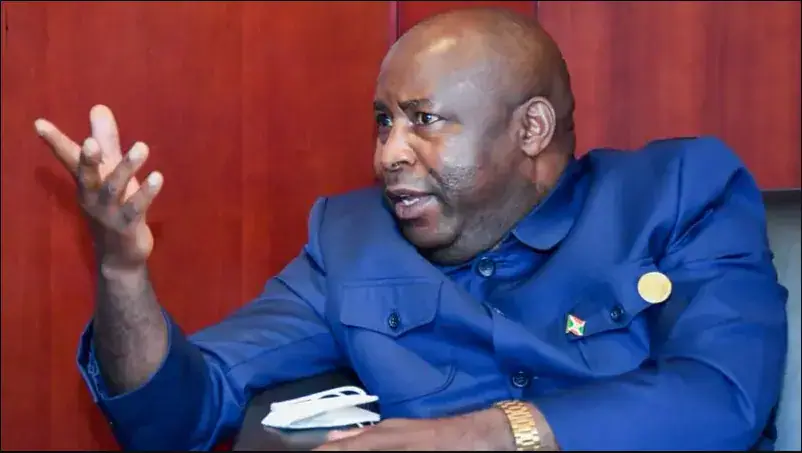
Burundi's President Évariste Ndayishimiye has sparked controversy with his recent remarks accusing Rwanda's President Paul Kagame of playing a role in the 1995 killing of Hutu students in Burundi. Ndayishimiye made these claims during a ceremony marking the end of a week dedicated to CNDD-FDD war veterans at Stade Ingoma in Gitega on November 21, 2026. He alleged that Kagame, who was then Rwanda's Vice President and Minister of Defence, had met with Tutsi students at Kiriri Campus in Bujumbura and incited them to kill their Hutu peers.
Ndayishimiye's claims have been met with skepticism and criticism, with many questioning the lack of concrete evidence to support his allegations. According to reports from SOS Médias Burundi, Ndayishimiye failed to provide any documentation, independent testimony, or evidence to back up his claims. The Burundian president's remarks have reignited tensions between Burundi and Rwanda, which have had strained relations for some time. The two countries have been accusing each other of supporting rival armed groups in the Democratic Republic of Congo.
The alleged incident that Ndayishimiye referred to occurred on June 11, 1995, when Hutu students were killed in Bujumbura. However, there are conflicting reports about the exact location and circumstances of the event. While Ndayishimiye claimed that the killings took place at the University of Burundi, SOS Médias Burundi reported that they occurred on various campuses, including Mutanga, Kamenge, Kiriri, and Zege.
Critics have argued that Ndayishimiye's claims are unfounded and serve only to fuel tensions between the two countries. Pollownox, a social media user, noted that the Rwanda issue is often used as a scapegoat for regional political and security problems. Florentine Kabasinga, another critic, expressed concerns about the weight of Ndayishimiye's allegations, stating that they require concrete evidence to be substantiated.
The Burundian government's relations with Rwanda have been strained in recent years, with both countries accusing each other of supporting rival armed groups in the Democratic Republic of Congo. The M23 rebel group, which has been active in eastern DRC, has been a point of contention between the two countries. Burundi and DRC have accused Rwanda of supporting M23, while Rwanda has denied these allegations and accused Burundi and DRC of collaborating with the FDLR rebel group.
The controversy surrounding Ndayishimiye's claims has highlighted the ongoing tensions between Burundi and Rwanda. The two countries have a complex and troubled history, including the 1994 genocide in Rwanda and the subsequent refugee crisis in Burundi. The legacy of these events continues to shape the relations between the two countries, with many Burundians and Rwandans still seeking justice and reconciliation.
The Commission for Truth and Reconciliation in Burundi has conducted research on the 1995 killings and reported that 109 students were killed. However, the commission's findings have not provided any clear evidence linking President Kagame to the incident. As the controversy surrounding Ndayishimiye's claims continues, it remains to be seen how the relations between Burundi and Rwanda will evolve in the coming months.
Key points
- Burundi's President Évariste Ndayishimiye made unsubstantiated claims that Rwanda's President Paul Kagame was involved in the 1995 killing of Hutu students in Burundi.
- Ndayishimiye's allegations have been met with skepticism and criticism, with many questioning the lack of concrete evidence to support his claims.
- The controversy has highlighted the ongoing tensions between Burundi and Rwanda, which have been accusing each other of supporting rival armed groups in the Democratic Republic of Congo.
Reporting sources
- 2 Abarundi basabye Perezida Ndayisimiye kwerekana aho yakuye amagambo asebya nkana mugenzi we w'u Rwanda · https://www.kigalitoday.com/