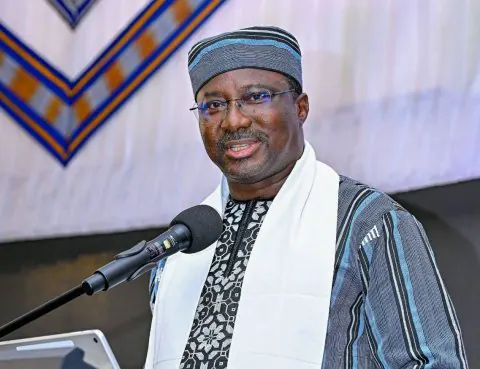
On October 7, 2026, Burkina Faso's Minister of Basic Education, Literacy, and Promotion of National Languages, Jacques Sosthène Dingara, presented major reforms in the education sector during the second phase of the National Days of Patriotic Engagement and Civic Participation (JEPPC). The reforms aim to improve the quality of education, increase access, and promote national values. The presentation took place at the government's exhibition, where the minister addressed citizens' concerns about the education system.
One of the key reforms is the development of preschool education. The number of public education and childcare centers has increased significantly, from around 500 in 2024 to over 2,700 in the 2025-2026 academic year. This growth reflects the government's commitment to enhancing access to education from an early age. The ministry has also recruited educators and constructed new infrastructure to support this expansion. Additionally, the department is optimizing school space by building multi-level structures, including R+3 buildings.
The reform of the school curriculum is another crucial aspect of the education transformation. The minister explained that teaching content has been revised to better reflect Burkina Faso's sociocultural and economic realities. English language instruction has been introduced from the CE1 level, aiming to familiarize students with the language from a young age. Civic education also plays a vital role in the new system, focusing on promoting discipline and citizenship values in schools.
The promotion of national languages is another important aspect of the reforms. The ministry has started introducing national languages into education, particularly for CP1 students. The goal is to enable children to learn to read and write in their mother tongue gradually. This initiative will be extended to more students and schools over time. Furthermore, the government has introduced a month-long artistic and cultural program to strengthen the connection between schools, cultural identity, and communities.
The minister also highlighted the importance of school gardens. Nearly 8,000 schools now have a school garden or farm, allowing students to participate in agricultural production to support school canteens. Over 12,000 tons of produce have been generated through these initiatives. This program not only provides food but also teaches children practical skills and promotes collective production. The minister emphasized that schools should contribute to food sovereignty.
In terms of academic performance, Minister Dingara reported a significant increase in the success rate for the Primary Education Certificate (CEP). The rate rose from 60% in 2021-2022 to 95.23% last year. The minister also discussed measures to improve learning quality, access to education, and school governance. These include the dematerialization of certain operations, decentralization of exam subject production, and reinforcement of education in emergency situations.
The governance of schools was also a key topic of discussion. The school council has been established as a platform to involve various community actors in school life and decision-making. This approach aims to strengthen parents', communities', and local actors' participation in school-related decisions. Citizens' questions addressed issues such as school fees regulation, student orientation, the role of the private sector, and school council functioning.
Key points
- The reforms focus on preschool development, national language promotion, and civic education.
- The number of public preschool centers has increased from 500 to over 2,700.
- The government aims to promote food sovereignty through school gardens and agricultural production.