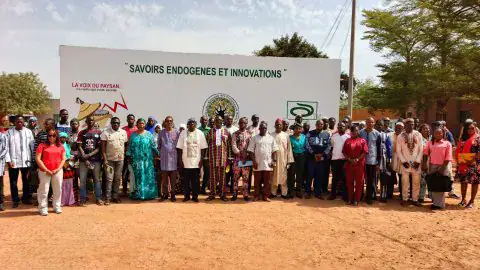
The Journée régionale de l'agroécologie, a two-day meeting, commenced on October 29, 2026, in Ouahigouya, Burkina Faso. Organized by the Confédération paysanne du Faso (CPF) with support from various partners, the event aims to explore ways to prioritize agroecology in local development policies. The meeting seeks to bridge national orientations with territorial realities and needs, promoting sustainable agricultural practices.
The event is set against the backdrop of land degradation, climate change impacts, and pressure on natural resources in Burkina Faso. These challenges underscore the need for a shift towards more sustainable and resilient production systems. The national strategy for agroecology development (SND-AE 2023-2027) has shown progress, including promoting agroecological practices and capacity building. However, insufficient public resource mobilization and difficulties in capitalizing on initiatives hinder large-scale deployment.
Yala Dahourou, a technical advisor representing the governor of the Yaadga region, emphasized the need to balance agricultural production growth with natural resource preservation. He advocated for integrating agroecological principles into the implementation of the Offensive agropastorale, hydraulique et halieutique to enhance productivity while preserving soil fertility and water resources.
Laurent Domboué, president of the Confédération paysanne du Faso (CPF), highlighted the importance of transitioning to agroecology, particularly for family farms facing soil degradation and climate change impacts. He stressed the need to preserve natural resources, valorize peasant know-how, and strengthen production system resilience. Domboué called for concrete actions in communes and villages, aligning with the 2023-2027 national agroecology strategy.
Nomewendé Joël Ouédraogo, president of the Fédération nationale des groupements Naam (FNGN), shared his organization's experience in promoting climate-resilient agricultural practices. The FNGN has successfully implemented various agroecological techniques, such as zaï, herbaceous strips, stone bunds, organic fertilization, and assisted natural regeneration. These approaches have helped restore soils and improve production, demonstrating the potential for sustainable agricultural practices.
Adama Gnanou, representing Humundi, praised the CPF initiative for providing a dialogue platform on integrating agroecology into territorial development. Humundi's approach focuses on transforming food systems by promoting healthy agricultural practices and strengthening collective dynamics. The organization aims to support local initiatives for more sustainable food systems.
The meeting will feature discussions on the national strategy, integrating agroecology into territorial policies, and mechanisms for supporting local initiatives. The goal is to develop concrete solutions and recommendations for incorporating agroecology into local development plans, ensuring a more sustainable and resilient agricultural sector in Burkina Faso.
Key points
- The Journée régionale de l'agroécologie aims to integrate agroecology into local development policies, focusing on sustainable practices and climate change resilience.
- The national strategy for agroecology development (SND-AE 2023-2027) seeks to promote sustainable agricultural practices and strengthen production system resilience.
- The meeting brings together various stakeholders to share experiences and develop concrete solutions for sustainable agricultural practices in Burkina Faso.