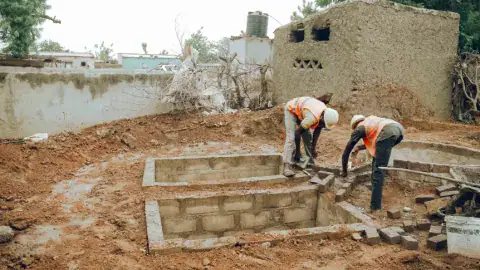
The recent surge in fertilizer prices and international market disruptions have exposed the vulnerabilities of African food systems. In Burkina Faso, experts are promoting biodigesters as a way to restore soil fertility, support producers, and strengthen food systems. According to the International Food Policy Research Institute (IFPRI), urea prices have nearly doubled in recent weeks, affecting farmers' access to essential agricultural inputs. This has significant implications for food security in the region.
Biodigesters, which convert organic matter into energy and nutrient-rich fertilizer, offer a promising solution. By utilizing local resources, such as animal waste, biodigesters can produce biogas and digestate, a valuable fertilizer for agriculture. This approach can help reduce dependence on imported fertilizers, decrease production costs, and enhance the resilience of agricultural systems. The digestate can improve soil structure, water retention, and nutrient availability for crops, making it an attractive alternative to synthetic fertilizers.
The Dutch organization SNV has played a crucial role in promoting biodigesters in Africa, with over a million installations worldwide. In Burkina Faso, SNV has worked with local partners to develop biodigesters as a productive technology, contributing to rural development. The organization has helped transform biodigesters from a primarily domestic cooking solution to a multifaceted technology that supports various aspects of rural development.
The benefits of biodigesters extend beyond energy production and fertilizer supply. They also offer economic opportunities for entrepreneurs, farmers, and local businesses. By valorizing local resources, biodigesters can help reduce expenditure on imported fertilizers and fuel, while improving living conditions for rural communities. This approach aligns with Burkina Faso's vision of food sovereignty, which emphasizes the importance of local resources and expertise.
In the Sahel region, where soil degradation and climate variability pose significant challenges to agricultural productivity, biodigesters have shown promising results. Experiences in Burkina Faso, Mali, and Niger demonstrate the potential of biodigesters to improve agricultural production systems sustainably. By supporting local organizations, financing mechanisms, and enterprises, biodigesters can contribute to long-term food security and resilience.
To fully leverage the potential of biodigesters, a structured market with quality installations, access to financing, and after-sales services is essential. Policymakers, technical partners, and financial actors must work together to create an enabling environment for biodigesters to thrive. This includes developing favorable policies, providing training and capacity-building programs, and ensuring the availability of spare parts and maintenance services.
While biodigesters are not a panacea for Africa's food security challenges, they can play a vital role in supporting sustainable agricultural practices and reducing dependence on imported inputs. By recognizing the contribution of biodigesters to food sovereignty and resilience, policymakers and development partners can help scale up their adoption and maximize their impact on rural development and food security.
Key points
- Biodigesters can help reduce Burkina Faso's dependence on imported fertilizers and support food sovereignty by valorizing local resources.
- The technology offers multiple benefits, including energy production, fertilizer supply, and economic opportunities for local businesses and farmers.
- A structured market and supportive policies are crucial to scaling up biodigester adoption and maximizing their impact on food security and rural development.