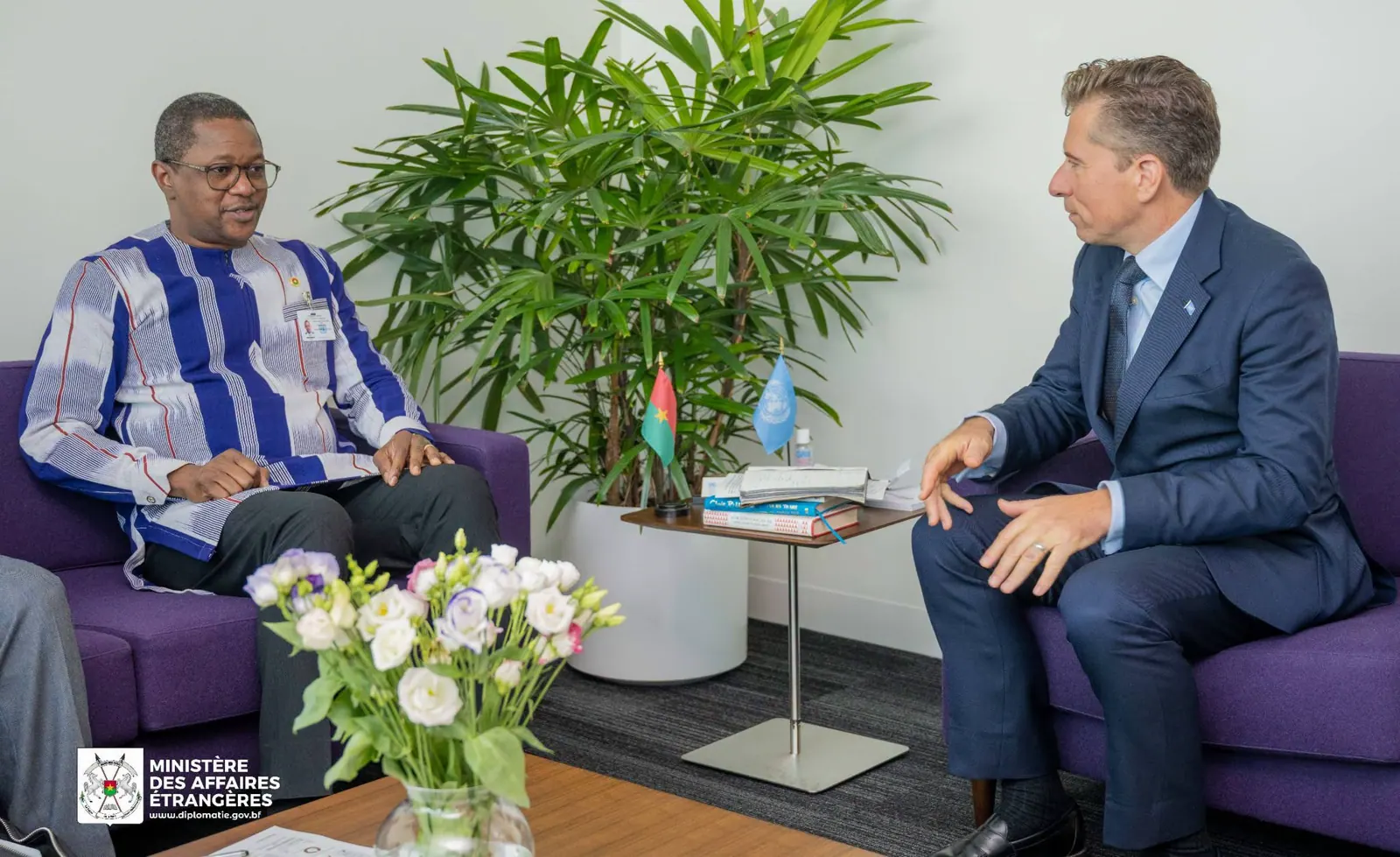
Burkina Faso's Foreign Minister Karamoko Jean Marie TRAORE has been meeting with multilateral partners on the sidelines of the UN General Assembly in New York. On September 24, he met with Tom Fletcher, Under-Secretary-General for Humanitarian Affairs and Emergency Relief Coordinator. Fletcher presented the dire financial situation of the UN agency, citing a historic and critical shortage of resources for emergency aid due to the departure of some donors.
Despite the decline in voluntary contributions from donors, Minister TRAORE assured Fletcher that Burkina Faso has developed endogenous mechanisms to address its humanitarian challenges. These mechanisms have been successful, thanks to the support of Burkinabè people, whose contributions have enabled a significant portion of initiatives to help populations return to liberated areas. This new approach aims to move beyond humanitarian aid and focus on resilience.
Minister TRAORE explained that Burkina Faso's national resource mobilization mechanisms will help break the cycle of humanitarian aid and foster resilience. In this new dynamic, the country's expectations from partners are for structural support that will ensure genuine autonomy for beneficiaries. This shift in approach reflects the government's desire to take ownership of its development and humanitarian efforts.
Minister TRAORE also met with Vanessa FRAZIER, Special Representative of the UN Secretary-General for Children and Armed Conflict. The two discussed collaboration on protecting children in Burkina Faso. The minister expressed frustration with UN reports on the situation of children in the country, which he believes do not accurately reflect the reality on the ground.
Minister TRAORE emphasized the need for a more accurate understanding of the situation in Burkina Faso, citing gaps between the situation on the ground and UN reports. He called for a more effective approach, taking into account the specificities of each country and avoiding simplistic solutions. FRAZIER and Fletcher promised to conduct technical visits to Burkina Faso to better understand the context and articulate partnership programs with national actors.
The visits by UN officials are expected to strengthen collaboration between Burkina Faso and the UN agencies. Minister TRAORE encouraged these visits, which will enable a more nuanced understanding of the country's challenges and facilitate more effective partnerships. This new approach to development and humanitarian aid reflects the government's commitment to self-sufficiency and resilience.
The meetings between Minister TRAORE and UN officials reflect a significant shift in Burkina Faso's approach to humanitarian aid and development. By focusing on endogenous mechanisms and structural support from partners, the country aims to break the cycle of dependency and foster sustainable development. The success of this approach will depend on effective collaboration between the government, UN agencies, and other partners.
Key points
- Burkina Faso is shifting its focus from humanitarian aid to self-sufficiency and resilience.
- The country's endogenous mechanisms have been successful in addressing humanitarian challenges.
- UN officials have promised to conduct technical visits to Burkina Faso to better understand the context and articulate partnership programs.