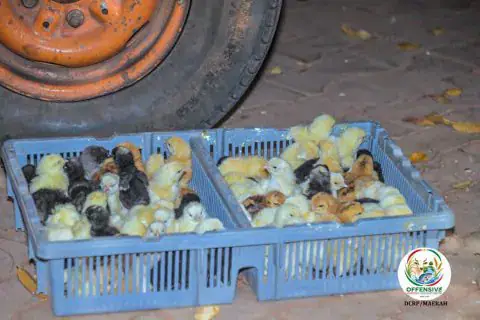
The Burkinabé authorities have intensified their efforts to combat the smuggling of animal products, seizing over 41,700 chicks in Ouagadougou on November 9, 2026. The operation was carried out by the General Directorate of Veterinary Services, with support from the National Gendarmerie. This seizure is part of a broader crackdown on the illegal importation of animal products, which is prohibited by the Ministry of Agriculture, Water, Animal Resources, and Fisheries.
According to Dr. Kadré Sanfo, Director of Veterinary Public Health and Legislation, despite the ban on importing chicks, some traders continue to smuggle them into the country. He emphasized that Burkina Faso has sufficient production capacity to meet domestic demand, and that the authorities are committed to supporting the local poultry industry. The seized chicks are currently undergoing laboratory tests to determine their health status and detect any potential diseases that could threaten the national livestock.
The Burkinabé government has urged traders to comply with regulations and partner with local hatcheries to ensure a regular supply of quality chicks. Dr. Sanfo warned that purchasing smuggled chicks can result in significant economic losses for farmers, as these animals may be of poor quality or carry diseases. In contrast, locally produced chicks are subject to regular health checks and monitoring by veterinary services, ensuring their quality and safety.
The authorities have called on farmers to prioritize purchasing chicks from authorized hatcheries, which are subject to veterinary monitoring. The public is also encouraged to report any suspected cases of smuggling to the relevant authorities. Dr. Sanfo stressed that respecting the ban on importing chicks is crucial to protecting the national livestock, preserving farmers' investments, and promoting the development of the Burkinabé poultry industry.
Laboratory tests are being conducted to assess the health status of the seized chicks and identify any potential risks to the national livestock. These tests aim to detect diseases that could have serious consequences for the poultry industry and the country's food security. The results of these tests will inform the authorities' decision on how to proceed with the seized chicks.
The Burkinabé poultry industry is a significant sector of the country's economy, providing employment and income for many people. The government's efforts to support the industry and protect it from the risks associated with smuggling are critical to ensuring its long-term sustainability. By promoting the production and sale of locally produced chicks, the authorities aim to reduce the country's reliance on imports and improve the overall quality of the poultry industry.
The seizure of over 41,700 smuggled chicks is a significant blow to the black market trade in animal products, which poses a major threat to the country's livestock and food security. The authorities' commitment to enforcing regulations and supporting the local poultry industry is essential to preventing the spread of diseases and promoting sustainable agricultural practices.
Key points
- The Burkinabé authorities seized over 41,700 smuggled chicks in Ouagadougou on November 9, 2026, as part of efforts to curb the illegal importation of animal products.
- The country's poultry industry is working to increase production and meet domestic demand, with the support of the authorities.
- Laboratory tests are being conducted to assess the health status of the seized chicks and identify any potential risks to the national livestock.