The Projet d'appui à la stabilisation de l'axe Ouagadougou-Kaya-Dori-Djibo (OKDD) has made a significant impact in the Koulsé region of Burkina Faso. Funded by the European Union to the tune of over 32 billion FCFA, the project has brought about positive changes in the lives of beneficiaries. A recent visit by a delegation from the EU, accompanied by regional authorities, revealed the impressive results of the project.
In the village of Kotoul Yarcé, the project has enabled households to engage in goat farming, providing a source of income for families who had previously fled their homes due to insecurity. In 2025, 24 households, including 13 headed by men and 11 by women, received four goats, one buck, and a livestock feed kit each. The beneficiaries also received training in animal husbandry, enabling them to better care for their animals and develop their activities.
The project has led to a significant increase in the goat population in Kotoul Yarcé, with the current stock standing at 186 animals, up from 120. Beneficiaries like Kadidiata Ouédraogo have seen their lives improve dramatically, with her goat stock increasing from 5 to 15. She has been able to use the proceeds from selling some of the goats to meet her family's needs, including healthcare and education expenses.
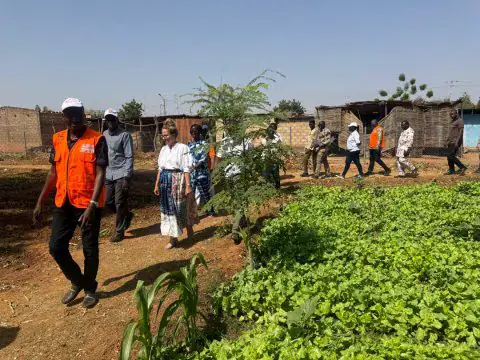
The project's impact extends beyond livestock farming. In the province of Sandbondtenga, 475 households have been trained and provided with 2,375 goats and 475 livestock feed kits. Additionally, 111 women in Kaya's sector 2 have been empowered through a market gardening project, which has provided them with a source of autonomy and income.
The market gardening project, implemented on a 2-hectare site, has enabled the 111 women to cultivate various crops throughout the year. The project, valued at over 40.9 million FCFA, has resulted in an average net income of over 200,000 FCFA per beneficiary, translating to over 22 million FCFA for all beneficiaries.
Despite the successes, challenges persist. Kadidiata Ouédraogo highlighted the difficulties in accessing water and feeding the animals during the dry season. The beneficiaries have to rely on carts to fetch water, which sometimes overturns, and purchase feed during the dry season.
The EU delegation, led by Inga Stefanowicz, expressed their satisfaction with the project's progress and reaffirmed their commitment to Burkina Faso. The project's achievements demonstrate the positive impact of EU funding on the lives of Burkinabé citizens, and its continuation is expected to bring more benefits to the region.
Key points
- The OKDD project has improved the livelihoods of beneficiaries in the Koulsé region through livestock farming and education initiatives.
- The project has empowered women through market gardening, providing them with a source of autonomy and income.
- Despite challenges, the project's impact is expected to continue, with the EU reaffirming its commitment to Burkina Faso.