The "Month of Health Communication in National Languages" campaign has reached the Nakambé region in Burkina Faso, with the aim of improving healthcare access and understanding among local populations. As part of the campaign, a press caravan from the Ministry of Health visited Tenkodogo on November 18, 2026, to engage with local actors and listeners. The visit showcased healthcare achievements over the past four years under the Mouvement patriotique pour la sauvegarde de la patrie (MPSR 2) regime.
The Nakambé region has seen significant investments in healthcare infrastructure, including the construction and launch of 45 new health and social promotion centers (CSPS) and medical centers. Additionally, dialysis and intensive care services have been introduced, and equipped with state-of-the-art equipment such as operating tables, autoclaves, generators, mobile clinics, and vaccine refrigerators. The region has also received 18 ambulances and 7 supervisory vehicles to enhance healthcare delivery.
The campaign has also focused on strengthening the healthcare workforce in the region. According to Dr. Lendé Tougri, Director Regional de la Santé du Nakambé, around 200 healthcare professionals, including specialists, nurses, midwives, and general practitioners, have joined the region's healthcare system in 2026 alone. This influx of personnel aims to increase the availability and quality of healthcare services in the Nakambé region.
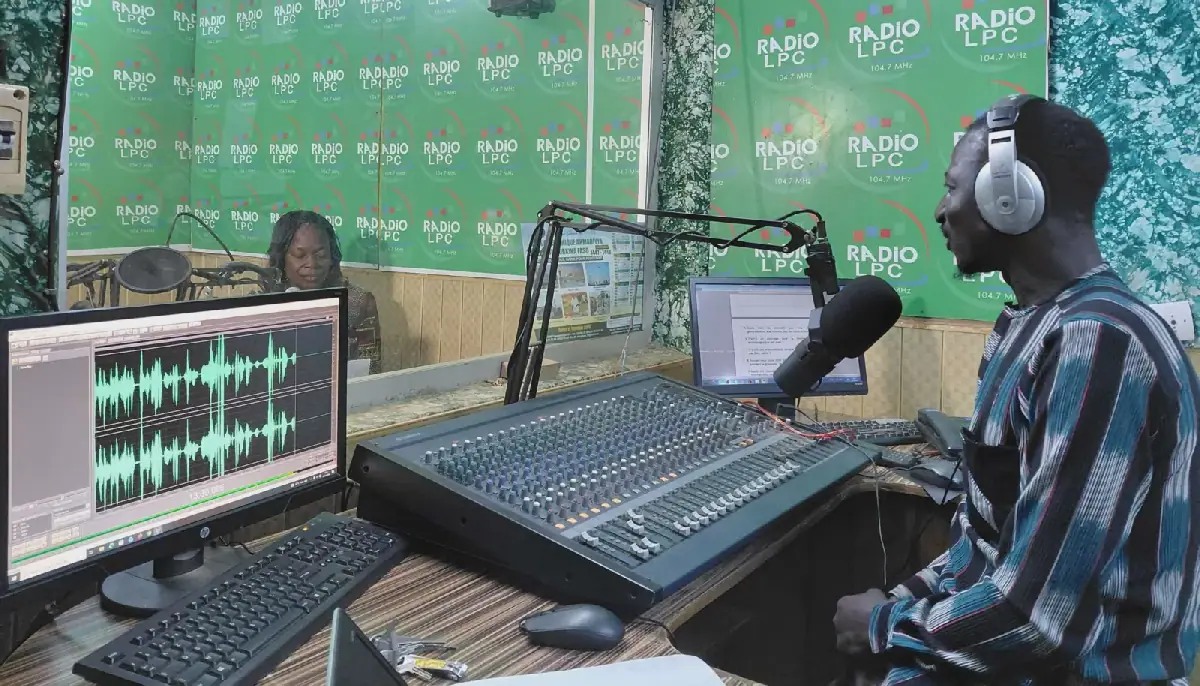
To effectively communicate public health messages to local populations, 14 radio stations are collaborating with the Ministry of Health to broadcast programs in national languages such as mooré, bissa, yaana, fulfuldé, and gourmantchéma. This approach has been welcomed by local listeners, who appreciate the opportunity to access health information in their native languages.
During the campaign, journalists participated in a live broadcast and gathered feedback from listeners. Céline Koala, a listener from radio Liberté de parler et de communiquer (LPT), expressed her satisfaction with the health programs in national languages, highlighting their importance in promoting maternal and infant health. She emphasized that listening to health information in her native language helps her better understand and take seriously the health of her family.
Kobiané Adama, head nurse at CSPS urbain 2 in Tenkodogo, noted that local health structures have long been adapting to the needs of the population by conducting awareness campaigns in local languages. He sees the health communication month as a reinforcement of existing initiatives, which include advanced strategy outings in villages and the establishment of awareness sites within health facilities.
The campaign's impact is expected to be long-term, with local populations and healthcare providers expressing their desire for such initiatives to be sustained and expanded. As the campaign continues, it is likely to contribute to improved health outcomes and increased access to quality healthcare services in the Nakambé region.
Key points
- The campaign has led to significant investments in healthcare infrastructure in the Nakambé region, including 45 new health and social promotion centers (CSPS) and medical centers.
- Around 200 healthcare professionals have joined the region's healthcare system in 2026 alone, aiming to increase the availability and quality of healthcare services.
- The campaign has introduced health programs in national languages, improving access to health information for local populations.