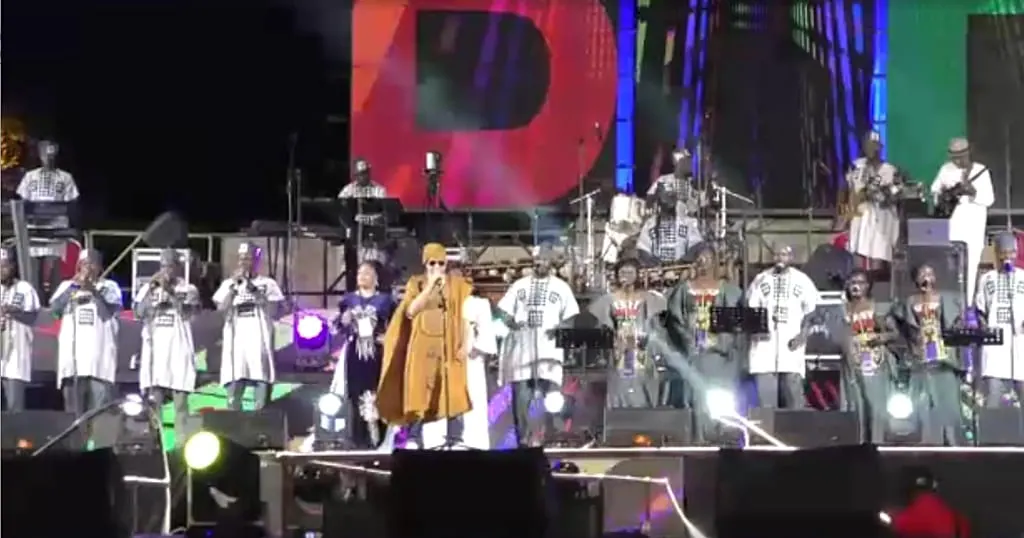
On Wednesday night, people gathered in Ougadougou's Place de la Révolution to mark four years since Captain Ibrahim Traoré seized power. The event was the culmination of anniversary celebrations, with attendees paying tribute to the armed forces and the military government's accomplishments. One resident, Abdoul Rasmané Sawadogo, expressed his admiration for the military leaders, saying they have created an "ultra-modern army that meets expectations".
Despite perceived successes, Burkina Faso remains under pressure from jihadist groups, with large parts of the country affected by violence and some towns facing blockades. However, the military government has implemented numerous development projects across various sectors, including security, health, education, agriculture, industry, and road infrastructure. These projects have been carried out over the past four years, with journalist and political analyst Issouf Ouédraogo noting that "work is being done on the ground".
Ouédraogo highlighted the significant changes visible in Burkina Faso, whether in terms of morale or infrastructure. He believes the authorities are instilling a sense of sovereignty among the Burkinabe, encouraging them to rely on themselves. However, Ouédraogo also acknowledged areas for improvement, particularly in sectors such as corruption, freedom of expression, and human rights.
The journalist and political analyst emphasized the need for greater equality before the law and more effective anti-corruption measures. He also stressed the importance of collaboration with neighboring countries, including Mali and Niger, which together with Burkina Faso form the Alliance of Sahel States. This cooperation is crucial in addressing the country's challenges, including the return of over 1.3 million people internally displaced by insecurity.
According to the government, more than 1.3 million people internally displaced by insecurity have returned to their home towns. However, Ouédraogo believes this figure needs to be improved upon. The return of internally displaced persons is a key aspect of the country's recovery, and the government must continue to work towards creating a stable and secure environment.
The celebrations in Ougadougou demonstrated the military government's efforts to showcase its achievements and build a sense of national unity. The event was attended by numerous residents, who acknowledged the progress made in various sectors. However, the country's challenges persist, and the government must continue to address these issues to ensure long-term stability and development.
As Burkina Faso marks four years since Captain Ibrahim Traoré came to power, the country's future remains uncertain. While progress has been made in various areas, challenges persist, including the threat of jihadist groups and the need for greater equality before the law. The government must continue to work towards addressing these issues and building a more stable and secure future for its citizens.
Key points
- The military government has implemented numerous development projects across various sectors, including security, health, education, agriculture, industry, and road infrastructure.
- Despite perceived successes, Burkina Faso remains under pressure from jihadist groups, with large parts of the country affected by violence and some towns facing blockades.
- The government claims that over 1.3 million people internally displaced by insecurity have returned to their home towns, but this figure needs to be improved upon.