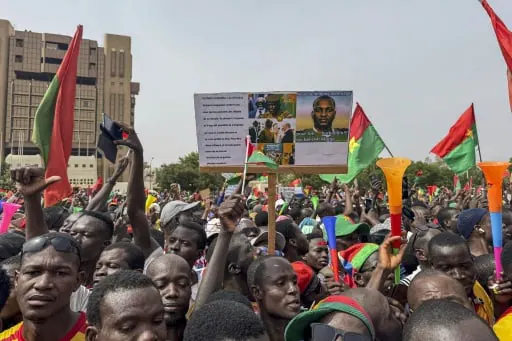
Burkina Faso's junta has been working towards economic self-sufficiency since seizing power four years ago. The military government, led by Ibrahim Traore, has been implementing various projects to reduce the country's reliance on external aid. Traore has regularly launched projects, laid foundation stones, and opened factories to boost local production and processing. The government's focus on textiles, arms manufacturing, agriculture, and raw materials is part of its strategy to achieve economic self-reliance.
The junta's efforts to achieve economic self-sufficiency are backed by an aggressive communications strategy, particularly on social media. The government has been promoting its initiatives and achievements through various channels to gain public support. Economist Abdoul Kader Ouedraogo noted that the country's quest for sovereignty leaves it with no choice but to rely on its own resources. The government's budget has been constantly rising, with revenue increasing from 2,600 billion CFA francs in 2023 to 3,700 billion in 2026.
Despite the junta's efforts to control criticism, it is clear that the state budget has grown significantly. Ouedraogo stated that the budget has done nothing but grow over the past four years, with revenue rising substantially. The country's deficit is also under control, falling from 4.6 to 2.6 percent of GDP. The government is seeking to finance itself, with 90 percent of revenue coming from taxes.
Burkina Faso's government has committed to developing the landlocked country on its own or with partners deemed more genuine than colonial and post-colonial powers like France and the European Union. The junta is following the example of the revolution championed by Thomas Sankara, a pan-Africanist hero and fellow coup leader who advocated self-sufficiency in the 1980s. However, the country still receives loans from the International Monetary Fund and the World Bank to finance various projects.
According to official figures, cereal production in Burkina Faso reached 7.2 million tonnes in 2025, representing 126 percent of national needs. The industrial sector's contribution to GDP also rose from 24 to 32.9 percent. However, the country is not immune to inflation, despite price controls imposed by the authorities. Residents have complained about the high cost of living, with prices of goods such as cement, rice, sugar, eggs, and fish increasing in recent months.
One reason for Burkina Faso's trade surplus is its gold production, with the country extracting over 94 tonnes of the precious metal in 2025. The government opened a major gold refinery in Ouagadougou in late September, another example of its drive for control over the processing of its own raw materials. Traore stated that the economic revolution is going from strength to strength, with many reforms and initiatives launched in agriculture and industry.
The junta leader makes no secret of his admiration for Sankara, who advocated self-sufficiency. The ruling military set up a Patriotic Support Fund in 2024, which helps finance the fight against jihadists that have plagued the country for over a decade. The scheme has raised around $850 million through voluntary donations, compulsory deductions, and levies on consumer goods. However, some have expressed concerns that the anti-jihadist military campaign could be putting a strain on household incomes.
Key points
- The junta's efforts to achieve economic self-sufficiency are driven by its quest for sovereignty and a desire to reduce reliance on external aid.
- The government's budget has grown significantly, with revenue increasing from 2,600 billion CFA francs in 2023 to 3,700 billion in 2026.
- Despite progress in some areas, Burkina Faso still faces challenges related to inflation and the high cost of living.