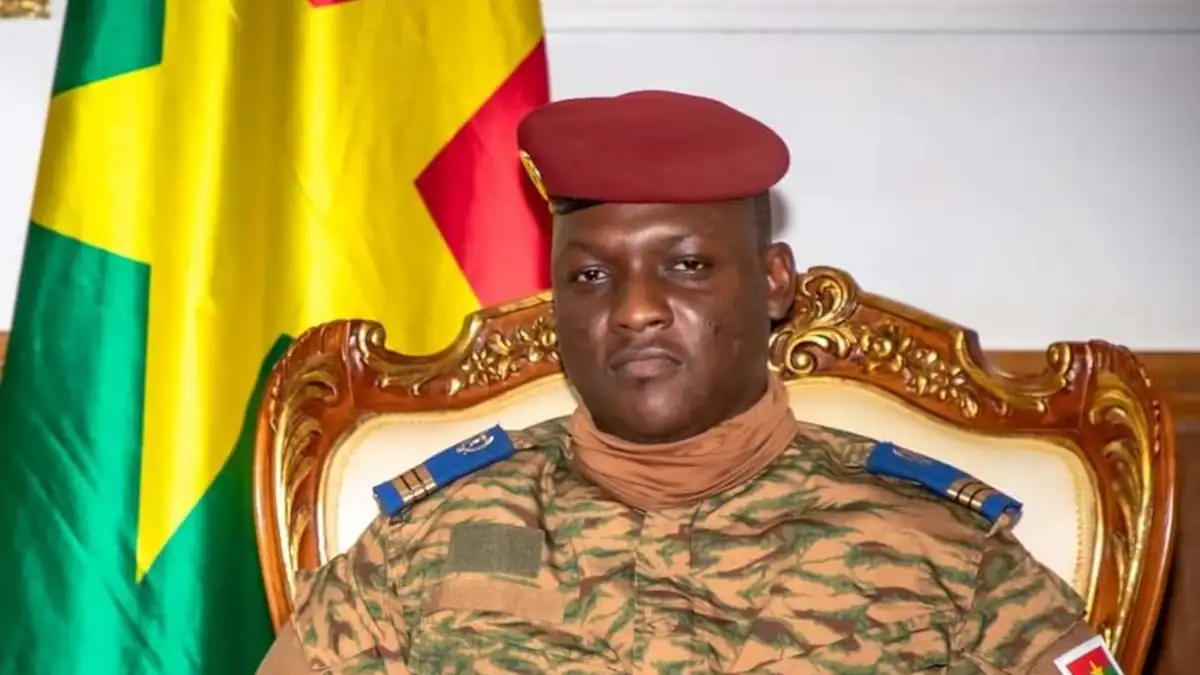
On September 27, 2026, Burkina Faso's President Ibrahim Traoré strongly criticized the International Criminal Court (ICC), describing it as an "organ of imperialism." In an interview with the press, Traoré expressed his concerns about the ICC's impartiality and its focus on African leaders. This statement comes as part of a broader trend among Sahel region countries to re-evaluate their relationships with international institutions perceived as being too closely aligned with Western powers.
The comments made by President Traoré follow a decision by the Alliance of Sahel States (AES), comprising Burkina Faso, Mali, and Niger, to withdraw from the Rome Statute, which binds these countries to the ICC. The process of withdrawal began on September 22, 2025, and concluded with official notifications submitted by each country in June 2026. Niger was the first to notify the United Nations Secretary-General on June 18, followed by Burkina Faso and Mali six days later. The withdrawals were officially recorded by the UN on June 30.
The Sahel region countries justified their decision to leave the Rome Statute by accusing the ICC of being an "instrument of neocolonial repression" and denouncing a "perversion of its objectives" and "instrumentalization." President Traoré cited several examples to support his claims, including the Iraq war, the military intervention in Libya, and the post-electoral crisis in Côte d'Ivoire from 2010 to 2011. He questioned the ICC's inaction regarding these incidents, particularly the acquittal of Laurent Gbagbo.
Traoré also highlighted what he perceives as a double standard in the ICC's treatment of African and Western leaders. He pointed out that since its inception, the ICC has primarily focused on African leaders, while few Western leaders have been brought before the court. This perceived imbalance in the application of justice, according to Traoré, justifies the decision of Burkina Faso, Mali, and Niger to withdraw from the Rome Statute.
The withdrawal from the ICC is part of a broader strategy by the AES countries to redefine their relationships with international institutions they view as being overly influenced by Western powers. This move follows their departure from the Economic Community of West African States (ECOWAS) and the Organisation internationale de la Francophonie. These changes reflect a shift in the geopolitical alignments of the Sahel region countries.
The critique of the ICC by President Traoré and the subsequent withdrawal of his country from the Rome Statute highlight ongoing tensions between some African nations and international judicial bodies. The debate surrounding the ICC's role and impartiality continues, with various countries re-evaluating their participation in international institutions. The situation underscores the complexities of global governance and the challenges of maintaining perceived fairness and equity in international justice.
As the geopolitical landscape in West Africa continues to evolve, the decisions made by the AES countries will likely have significant implications for their relationships with international partners and institutions. The stance taken by President Traoré and his counterparts in Mali and Niger reflects a broader trend of reasserting national sovereignty and challenging the status quo in global affairs.
Key points
- The President of Burkina Faso, Ibrahim Traoré, has denounced the International Criminal Court as an "imperialist" organ.
- The Alliance of Sahel States, comprising Burkina Faso, Mali, and Niger, has withdrawn from the Rome Statute.
- The withdrawals reflect a broader trend among Sahel region countries to re-evaluate their relationships with international institutions perceived as being too closely aligned with Western powers.