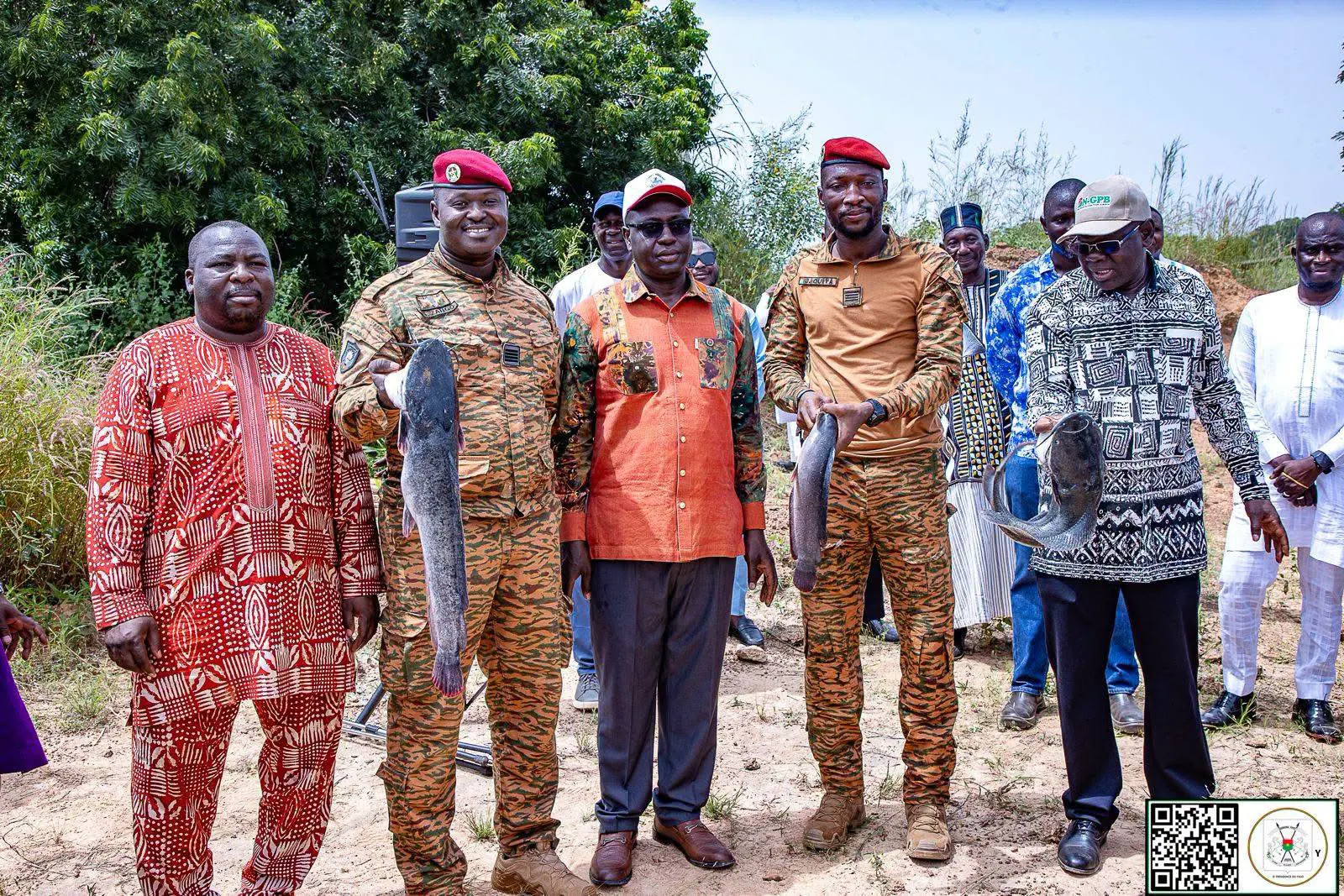
The Garde Républicaine of Burkina Faso has successfully harvested its first pisciculture production at the Camp Naaba-Koom II in Ouagadougou. This achievement marks a significant milestone in the country's efforts to enhance food sovereignty. The project was initiated to strengthen self-sufficiency in food production within the military barracks. The Garde Républicaine has been working on this project since October 2026, with the support of the Bureau national des grands projets du Burkina and the ministry in charge of Ressources halieutiques.
For this experimental phase, two pisciculture basins with a capacity of 80 m³ each were constructed. A total of 5,000 catfish fry were introduced into the basins, with 2,000 in the first basin and 3,000 in the second. After approximately seven months of care, feeding, and maintenance, the initial results are deemed satisfactory. Some specimens have reached an average weight of around 3.5 kg. This harvest is part of a broader initiative to promote food production and self-sufficiency within the military.
The harvested fish are intended for internal consumption within the military barracks. To ensure the conservation and valorization of the fish, the unit is equipped with a smokehouse capable of processing 200 kg per day. This facility will enable the military to store and utilize the fish for an extended period. The project also has a social component, aiming to involve soldiers wounded in combat and invalided military personnel in production activities using mobile cages.
The pisciculture project at Camp Naaba-Koom II is a pilot initiative that is expected to be replicated in other military barracks across the country. The Garde Républicaine plans to extend this project to other locations, with the goal of increasing food production and contributing to national food sovereignty. This initiative aligns with the government's efforts to promote self-sufficiency in food production.
In addition to pisciculture, the military has already established various agricultural activities, including poultry farming, pig farming, and sheep breeding, in 13 barracks across the country. These initiatives have contributed significantly to food production and self-sufficiency within the military. The success of the pisciculture project is expected to inspire further investment in agricultural activities within the military.
The project's success is attributed to the collaboration between the Garde Républicaine, the Bureau national des grands projets du Burkina, and the ministry in charge of Ressources halieutiques. The involvement of these stakeholders has ensured the effective implementation of the project. The Garde Républicaine's commitment to food sovereignty is evident in its efforts to establish sustainable agricultural practices within the military.
The Garde Républicaine's pisciculture project has demonstrated the potential for military institutions to contribute to national food production and sovereignty. The project's success is expected to inspire other military institutions to invest in agricultural activities. With this achievement, the Garde Républicaine has made a significant contribution to Burkina Faso's efforts to enhance food security and self-sufficiency.
Key points
- The Garde Républicaine's pisciculture project aims to promote food sovereignty and self-sufficiency within the military barracks.
- The project has a social component, involving soldiers wounded in combat and invalided military personnel in production activities.
- The initiative is expected to be replicated in other military barracks across the country, contributing to national food production and sovereignty.