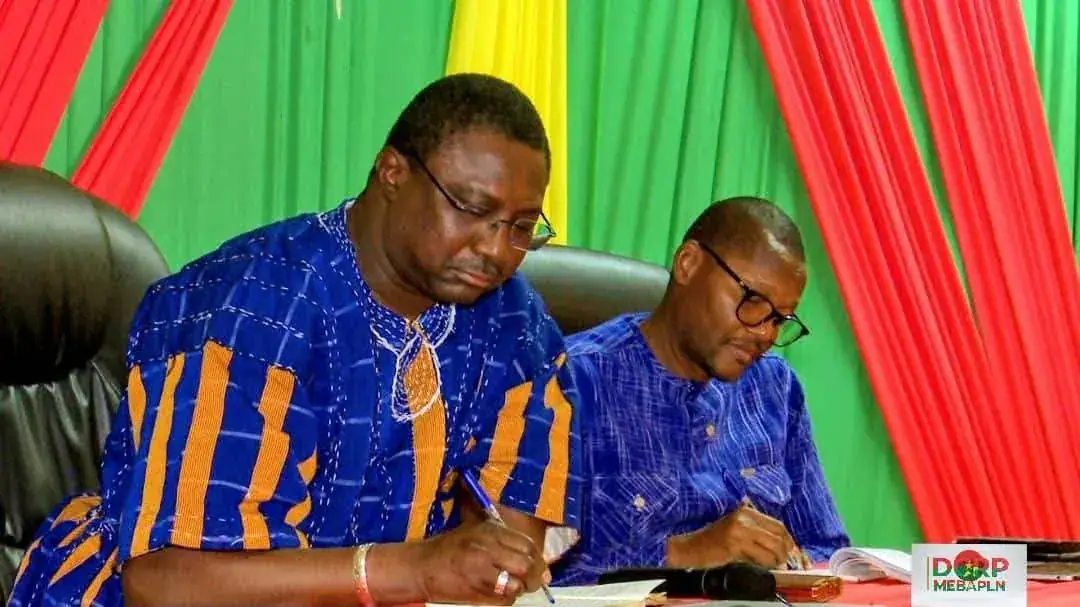
The Burkinabé government has made significant strides in implementing educational reforms in the Djôrô region. A recent meeting between Minister of Basic Education, Literacy, and Promotion of National Languages, Jacques Sosthène Dingara, and regional education stakeholders highlighted the progress made during the 2026-2027 academic year. The meeting was part of a national tour to monitor educational reforms.
The region has made notable progress in implementing various educational reforms. These include the introduction of national language instruction from the first year of primary school, creation of transitional classes for inclusive education, and measures to decentralize knowledge and regulate private school fees. According to Sié Palé, the regional director of preschool, primary, and non-formal education, the region now has 106 functional preschool structures, 909 public and private primary schools, and 51 non-formal education centers.
Five transitional classes for inclusive education have been established in the region, four of which offer sign language instruction. Additionally, preschool student monitors are being trained in braille. Palé also confirmed that private schools in the region are complying with regulations regarding school fees. These developments aim to improve access to quality education for all students.
The region's efforts have yielded impressive results, with a 94% pass rate in the 2026 Primary Education Certificate exam. This was announced by Djôrô Governor Siaka Baro, who praised the minister's proximity approach and assured regional authorities' support for implementing reforms. The high pass rate reflects the effectiveness of the educational reforms.
Minister Dingara urged education stakeholders to build on the progress made and fully adopt the new educational innovations. He emphasized the importance of decentralizing knowledge and educational practices to foster citizens who value their cultural heritage and are committed to national development. This vision aligns with the government's goals for education reform.
The meeting and subsequent discussions demonstrate the government's commitment to improving education in Burkina Faso. By engaging with regional stakeholders and monitoring progress, the government aims to create a more inclusive and effective education system. The establishment of transitional classes and introduction of national language instruction are key components of this effort.
The successful implementation of educational reforms in the Djôrô region serves as a model for other regions in Burkina Faso. With continued support and commitment from regional authorities and education stakeholders, the country can build a stronger, more inclusive education system that benefits all students. The government's focus on decentralizing knowledge and promoting cultural values will be crucial in achieving this goal.
Key points
- The Djôrô region in Burkina Faso achieved a 94% success rate in the 2026 Primary Education Certificate exam.