The Burkinabè government has made significant strides in its agricultural sector, with cereal production increasing from 4.66 million tons to 7.14 million tons in 2025. This represents a 53% increase, allowing the country to cover approximately 124% of its cereal needs. The growth is attributed to the implementation of the 2023-2025 Agro-Pastoral and Fisheries Offensive, aimed at boosting national production and reducing dependence on imports.
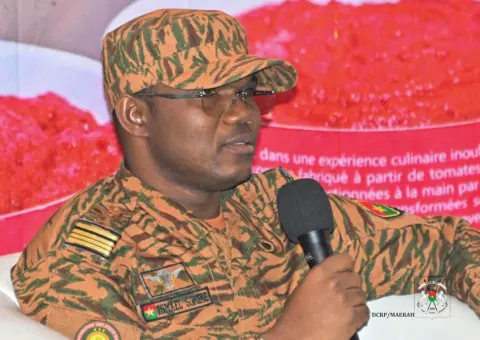
The country's Minister of Agriculture, Ismaël Sombié, highlighted the challenges faced by Burkina Faso before the offensive, including 19.2% of the population suffering from undernourishment and spending 148.5 billion FCFA on rice and wheat imports. The government has invested in water management, land development, mechanization, and access to inputs, resulting in the development of 11,774 hectares of irrigated perimeters and 41,275 hectares of lowlands.
The production of rice paddy has reached a historic high of 1,008,737 tons, while maize production has reached 2,686,531 tons. The poultry sector has also seen significant growth, with 18.26 million heads produced. These advancements are part of the government's strategy to create a sustainable agricultural system that meets the population's food needs while generating income for producers.
The government aims to move beyond increasing production volumes and focus on constructing a system that can respond to the population's food needs while generating income for producers. To achieve this, the government has strengthened cereal collection through the transformation of the SONAGESS into a purchasing center. Over 350,000 tons of cereals were purchased directly from producers during the 2025-2026 campaign.
The country's food sovereignty stocks exceed 380,000 tons, providing an essential instrument for strengthening food security and regulating the market. The government also plans to reduce losses and increase the value added to its production through local processing. This includes developing storage, conservation, and processing infrastructure, such as 418 storage warehouses and 63 processing units.
A new phase of the Agro-Pastoral and Fisheries Offensive, 2026-2028, has been launched with a total cost of 839.99 billion FCFA. The program targets twenty priority sectors and aims to maintain cereal needs coverage at at least 120%. Water management remains a priority, with plans to build five new strategic dams and rehabilitate or dredge 200 dams.
The Burkinabè government is committed to making food sovereignty a shared responsibility. The new phase of the offensive aims to promote local production of fertilizers, develop agropoles, and extend storage and processing capacities. This approach is expected to create jobs, support the national industry, and provide new opportunities for young people and women in the agricultural sector.
Key points
- Cereal production in Burkina Faso has increased by 53% from 4.66 million tons to 7.14 million tons in 2025.