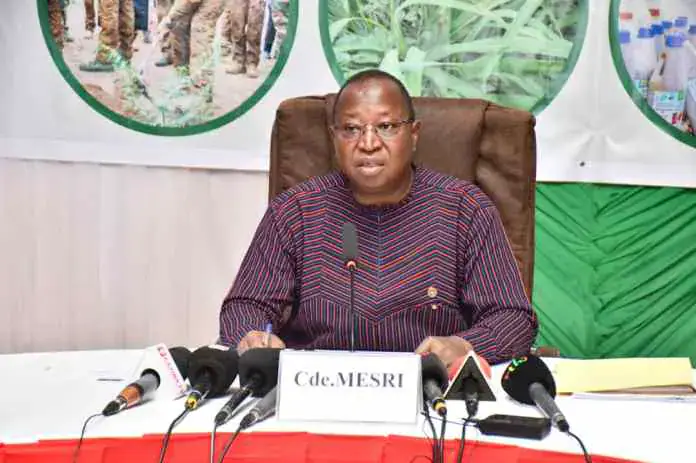
The Burkinabé government has taken a significant step towards achieving healthcare sovereignty by promoting traditional medicine. On November 23, 2026, the Minister of Higher Education, Research, and Innovation, Adjima Thiombiano, presided over the 26th consecutive ordinary session of the High National Council for Scientific Research and Innovation (HCNRSI) in Ouagadougou. The session brought together representatives from various ministerial departments, including Health, Secondary Education, and Digital Transition.
The assembly discussed the theme "Endogenous knowledge and sustainability of health systems: scientific valorization of medicinal plants for sovereignty in Burkina Faso." This theme aligns with the authorities' vision of promoting endogenous knowledge, particularly in traditional pharmacopoeia. The Minister of Research highlighted that nearly 11,000 traditional practitioners are registered in Burkina Faso, with around 5,500 formally recognized by the Ministry of Health. These practitioners work alongside medical doctors to address certain pathologies.
One of the key recommendations from the assembly was the establishment of mixed research teams comprising scientists and traditional practitioners. These teams will focus on national priority areas, such as combating dengue fever. The Minister announced that 18 phytomedicines have already received market authorization. He also noted that the Head of State, Captain Ibrahim Traoré, has ordered the creation of medicinal plant gardens.
Pharmacologist Silvain Ouédraogo emphasized the importance of collaboration between traditional practitioners and scientific research. He noted that traditional medicines are of high quality, effective in treating diseases, and accessible, particularly in rural areas. This collaboration enables researchers to determine the efficacy of traditional products, improve their quality, and ensure proper dosage and conservation.
Traditional practitioners expressed their desire for uniform recognition and formalization in Burkina Faso, similar to modern medicine. They also requested adapted equipment to meet current standards. The Minister of Higher Education, Research, and Innovation promised to address the lack of resources and support the development of traditional medicine.
The integration of traditional medicine into the healthcare system is expected to enhance healthcare sovereignty in Burkina Faso. The government aims to promote the valorization of medicinal plants and traditional knowledge, ensuring that traditional practitioners are recognized and equipped to provide quality healthcare services.
The collaboration between traditional practitioners, researchers, and the government is crucial in achieving this goal. By working together, they can develop effective treatments, improve healthcare outcomes, and increase access to healthcare services, particularly in rural areas.
Key points
- The Burkinabé government is promoting traditional medicine to achieve healthcare sovereignty by valorizing medicinal plants and integrating traditional practitioners into the healthcare system.