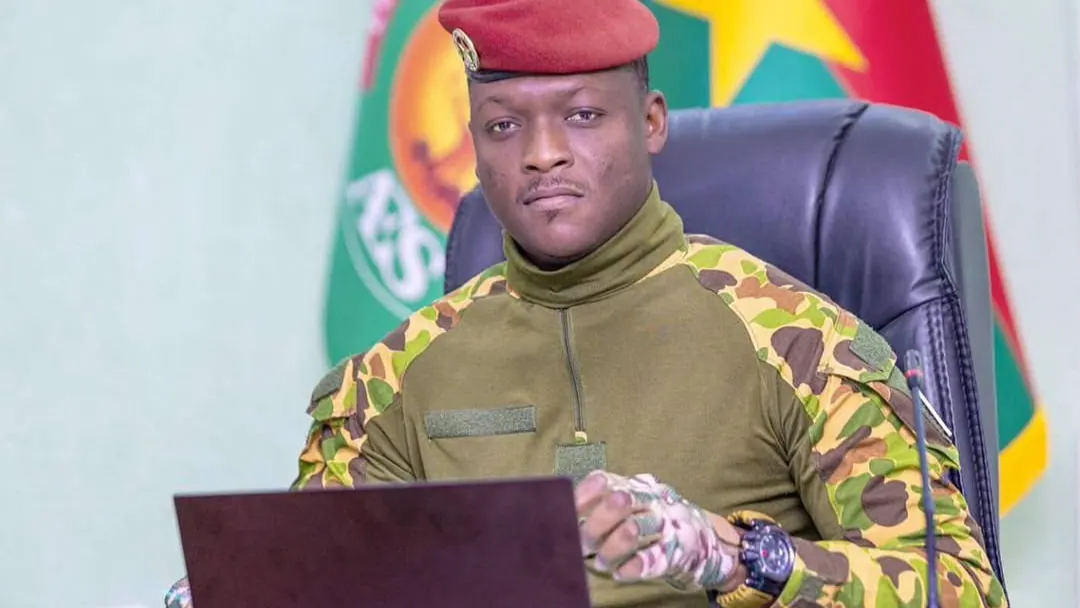
On September 27, 2026, Burkina Faso's President Ibrahim Traoré revealed his intention to adopt a new constitution and reorganize the country's political system. In an interview with journalists, Traoré stated that the reform aims to break away from the "spirit of political politicking." He did not provide a specific timeline for the elaboration or adoption of the new constitution. This move is seen as a significant development in the country's efforts to redefine its governance structure.
President Traoré emphasized that the new constitution will help to overcome the existing political landscape. He, however, did not elaborate on the specifics of the proposed changes. The announcement has sparked interest among citizens, who are eager to learn more about the planned reforms. Traoré's government has been working to address various challenges facing the country, including security concerns and economic development.
On the security front, Traoré discussed the ongoing efforts to establish a unified force within the Alliance of Sahel States (AES), which comprises Burkina Faso, Mali, and Niger. The president highlighted that the alliance will be financed through its own resources. This development is seen as a significant step towards enhancing regional cooperation and addressing common security challenges.
Regarding external relations, Traoré stated that Burkina Faso will not return to its previous cooperation format with France. He also expressed reservations about the country's relationship with the European Union. The president's comments suggest a shift in the country's diplomatic approach, as it seeks to redefine its partnerships and collaborations.
In a stern warning, Traoré addressed the issue of espionage and treason, stating that those found guilty will face severe sanctions, including the death penalty. This statement has sparked concerns about human rights and the rule of law in the country. Traoré's government has been working to maintain stability and security in the face of various challenges.
The proposed new constitution is seen as a key aspect of President Traoré's efforts to reform the country's governance structure. The president's announcement has sparked a national conversation about the future of Burkina Faso and its people. As the country moves forward, citizens and international observers will be watching closely to see how the reforms unfold.
The international community has taken note of President Traoré's announcement, with many observers eager to learn more about the planned reforms. The country's relationships with its partners and allies will likely be shaped by the evolving governance structure. For now, the focus remains on the implementation of the proposed changes and their potential impact on Burkina Faso's development.
Key points
- President Ibrahim Traoré announces plans for a new constitution to break away from the "spirit of political politicking."
- The new constitution is part of a broader effort to reorganize Burkina Faso's political system.
- Traoré warns of severe sanctions, including the death penalty, for those found guilty of espionage or treason.