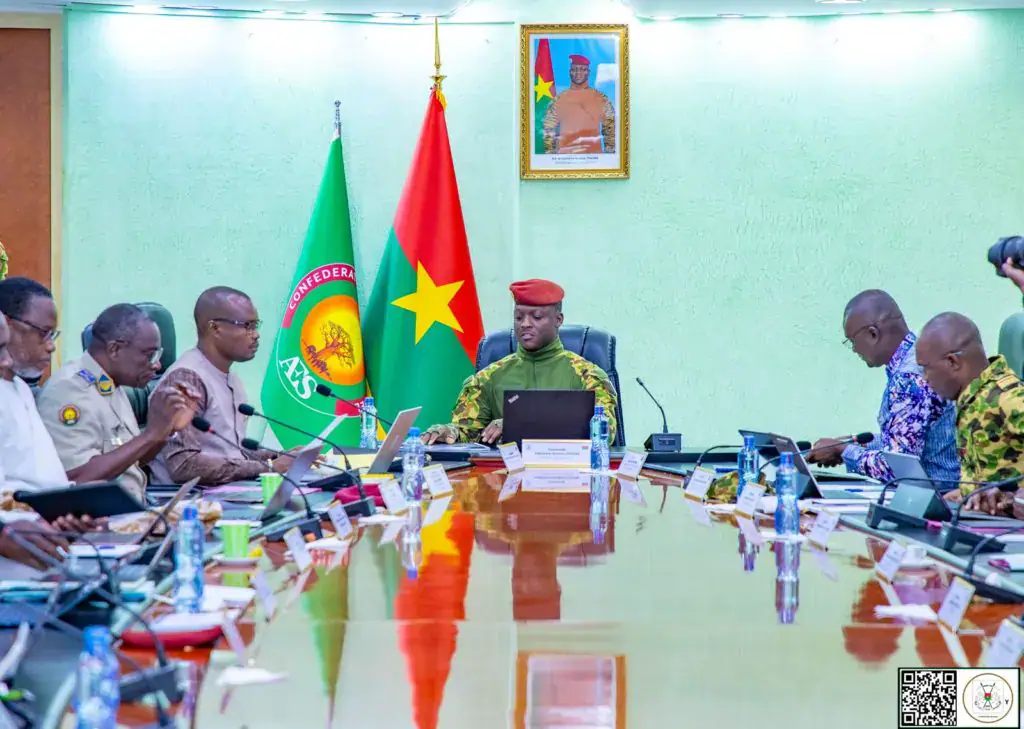
The Burkinabé government's Council of Ministers, led by President Ibrahim Traoré, has made several key decisions aimed at improving the lives of citizens. On September 24, 2026, the Council adopted various decrees and regulations to enhance the country's development and security. One significant decision was the creation of "FASO SANYA," a new administrative entity responsible for maintaining public buildings. This move aims to address the issue of poorly maintained public infrastructure due to bureaucratic inefficiencies.
The Council also made important decisions regarding the recognition of martyrs and invalids of the nation. Under a law passed on June 10, 2022, two decrees were adopted to honor citizens who demonstrated bravery and sacrifice during recent political, social, and security events. According to Government Spokesperson Pingdwendé Gilbert Ouédraogo, 315 people will be recognized as martyrs of the nation, while 10 others will be recognized as invalids. These individuals and their families will receive various benefits, including free public transportation, medical care, and psychological support.
The new regulations for non-governmental organizations (NGOs) operating in Burkina Faso are designed to ensure that a significant portion of their resources is used directly for fieldwork. As of now, NGOs are required to allocate at least 80% of their budget to direct investments, aiming to maximize the impact of their work and reduce administrative costs. This move is intended to prevent funds raised for vulnerable populations from being absorbed by operational costs and to guarantee tangible benefits for citizens.
To ensure compliance with the new regulations, NGOs have been granted a two-year grace period to adjust their operations. According to Minister Aboubakar Nakanabo, the new rules include the requirement for a framework agreement for Burkinabé associations and a seat agreement for foreign entities. These measures aim to enhance transparency and accountability in the operations of NGOs within the country.
The Council of Ministers also adopted a draft law on the public health code, which aims to modernize the regulatory framework for healthcare in Burkina Faso. The new code, necessary due to the obsolescence of the previous text from 1994, seeks to improve medical care, ensure equitable access to healthcare, and integrate regulations on organ donation, private healthcare, and palliative care.
The public health code also focuses on strengthening health surveillance, regulating the pharmaceutical market, and establishing a reserve sanitary corps. Furthermore, it aims to enhance the regulation of forensic medicine and plastic surgery. According to Health Minister Robert Lucien Jean Claude Kargougou, this reform is crucial for providing healthcare professionals with a modern regulatory tool.
The Burkinabé government's efforts to improve the effectiveness of NGOs and healthcare services reflect its broader commitment to enhancing the lives of its citizens. By ensuring that NGOs allocate a significant portion of their resources to direct fieldwork and modernizing the healthcare regulatory framework, the government aims to achieve tangible progress in addressing the country's challenges.
Key points
- The Burkinabé government has introduced new regulations requiring NGOs to allocate at least 80% of their resources directly to fieldwork.
- A new public health code has been adopted to modernize healthcare regulations in Burkina Faso.
- The government has recognized 315 martyrs and 10 invalids of the nation, providing them with various benefits.