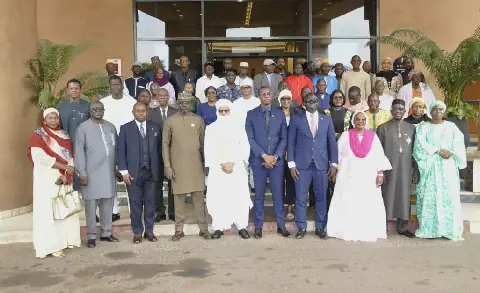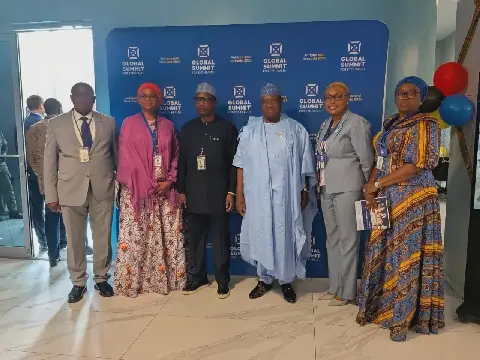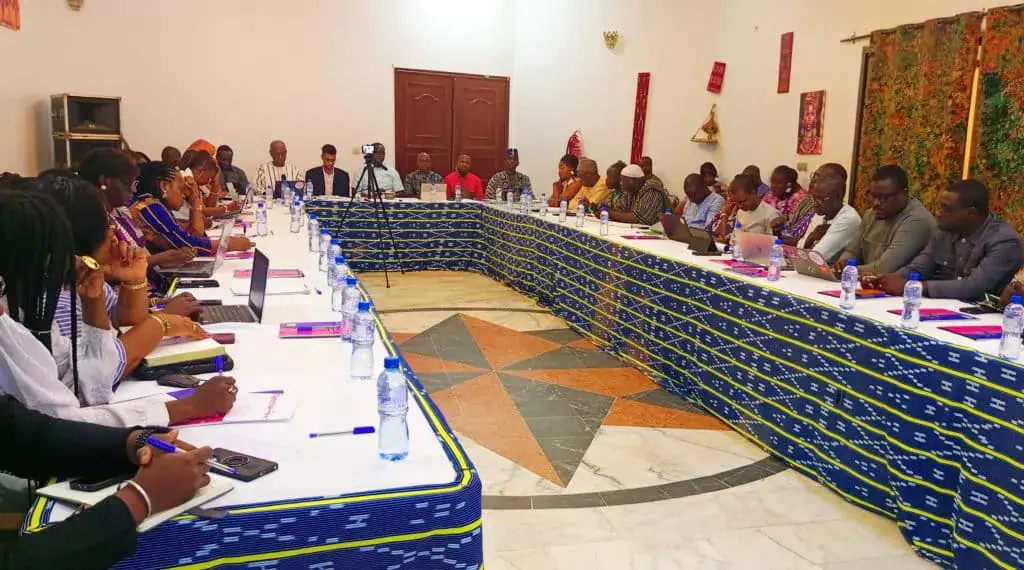
A national workshop on dialogue, social cohesion, and stability opened in Ouagadougou, Burkina Faso, on November 4, 2026. The event, organized by the Gorée Institute with support from the German Development Cooperation (GIZ), brings together around 35 participants from public institutions, civil society, youth and women's organizations, traditional and religious authorities, media, and academia. The workshop is part of the RISE-Dialogue initiative, which seeks to promote inclusive peacebuilding and strengthen community resilience.
The workshop's objective is to enhance mechanisms for dialogue, identify peace actors, and promote concerted actions to consolidate social cohesion and stability in Burkina Faso. Representing the Minister of Territorial Administration and Urban Mobility, Issa Demé, emphasized the importance of this meeting given the challenges faced by the country. He highlighted that peace is not just the absence of conflict but also the restoration of trust among communities and citizens.
Issa Demé called for leveraging endogenous resources, such as the tradition of "parenté à plaisanterie" (joking relationships) and the role of traditional and religious authorities, to consolidate peace. He stressed the need to revitalize and transmit these resources to younger generations to serve national reconciliation. Bruno Zidouemba, a member of the Gorée Institute's Board of Directors, emphasized that peacebuilding is a collective responsibility involving the state, institutions, communities, civil society, youth, and women.
The workshop aims to valorize local conflict prevention mechanisms, such as traditional mediation and dispute resolution devices. Doudou Dia, Executive Director of the Gorée Institute, explained that the discussions and recommendations from this consultation will inform the project's action plans for 2027-2030. The goal is to strengthen national and local actors' ownership of initiatives without substituting institutional efforts.
The project has three main axes of intervention: research-action, capacity building for local actors, and facilitation of dialogue at national and regional levels. Professor Ludovic Kibora, who participated in the inaugural panel, stressed the importance of permanent dialogue in conflict prevention. He advocated for dialogue to be conducted not only during crises but also as a continuous process within communities.
Kibora called for supporting endogenous initiatives, arguing that community resilience relies on their ability to draw on cultural resources and experiences to cope with shocks. The workshop's reflections will continue, focusing on transborder dynamics, cooperation, and conflict prevention. The event is expected to yield priority recommendations and concrete action plans to consolidate local peace initiatives and better articulate them with institutional frameworks.
The national workshop is a significant step towards promoting social cohesion and peace in Burkina Faso. The Gorée Institute's initiative seeks to create a more inclusive and sustainable peacebuilding process by engaging various stakeholders and leveraging local resources. The outcome of the workshop will contribute to the development of effective strategies for peace consolidation and community resilience in the country.
Key points
- The workshop aims to strengthen social cohesion and peace in Burkina Faso through dialogue and cooperation among various stakeholders.
- The initiative seeks to promote inclusive peacebuilding and strengthen community resilience by leveraging local resources and mechanisms.
- The project's action plans for 2027-2030 will be informed by the discussions and recommendations from this consultation.