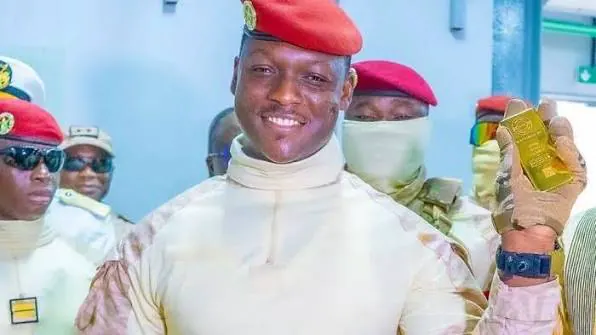
Burkina Faso has officially inaugurated its first domestic gold refinery, Raffinor-BF, in a significant move towards economic sovereignty. The facility, spanning five hectares, was opened by junta leader Captain Ibrahim Traoré in the capital. With an initial annual capacity of 164 tonnes, the plant aims to process gold from domestic mines and eventually from neighboring countries. The project was funded by the state and the domestic private sector, with a total cost of over 11 billion CFA francs, equivalent to $19 million.
The refinery's launch marks a major shift in Burkina Faso's economic policy, as the government seeks to capture a greater share of its mineral wealth. For decades, the country has exported raw resources abroad, but the Traoré administration aims to change this. The facility is expected to scale up its capacity to 515 tonnes per year, indicating the state's ambition to become a regional gold processing hub. Captain Traoré emphasized the importance of processing gold domestically, stating that the country wants to have the entire value chain on site.
The project is part of Captain Traoré's assertive nationalist economic agenda, which seeks to reduce economic dependence on foreign corporations and traditional Western partners. Since taking power in a September 2022 coup, Traoré has implemented several policy changes, including mandating that foreign mining firms grant the state a 15% stake and train local workers. The government has also created a national mining company and suspended exports from artisanal and semi-mechanised mines to tighten market oversight.
Burkina Faso is one of Africa's top gold producers, but successive administrations have struggled to regulate artisanal mining and curb smuggling. The government alleges that illicitly traded gold helps finance Islamist insurgencies, which have been a major security challenge in the country. Large territories remain outside full state control, and the government is working to address these issues. The launch of the refinery is seen as a step towards strengthening the country's economy and reducing its reliance on external partners.
The refinery's impact is expected to be significant, with Mines Minister Yacouba Zabré Gouba stating that the country will no longer export raw gold. Instead, the gold will be processed, controlled, valued, and certified domestically. This move is part of a broader campaign to promote domestic processing across other commodities, including cotton, textiles, and food processing. The government believes that this approach will help to boost economic sovereignty and reduce dependence on external partners.
The launch of the refinery coincides with record global gold prices and high international output. According to the World Gold Council, world mine production reached an estimated 3,672 tonnes in 2025. Burkina Faso's output rose by 17% year-on-year in the second quarter of 2026, indicating a positive trend for the country's mining sector. The government is optimistic that the refinery will help to drive economic growth and development.
The refinery's launch is seen as a significant achievement for Captain Traoré's administration, which has faced several challenges since taking power. The project demonstrates the government's commitment to promoting economic sovereignty and reducing dependence on external partners. As the country continues to navigate its economic challenges, the launch of the refinery provides a positive outlook for the future.
Key points
- The refinery has an initial annual capacity of 164 tonnes and is expected to scale up to 515 tonnes per year.
- The project is part of Captain Traoré's nationalist economic agenda, which seeks to reduce economic dependence on foreign corporations.
- The launch of the refinery coincides with record global gold prices and high international output.