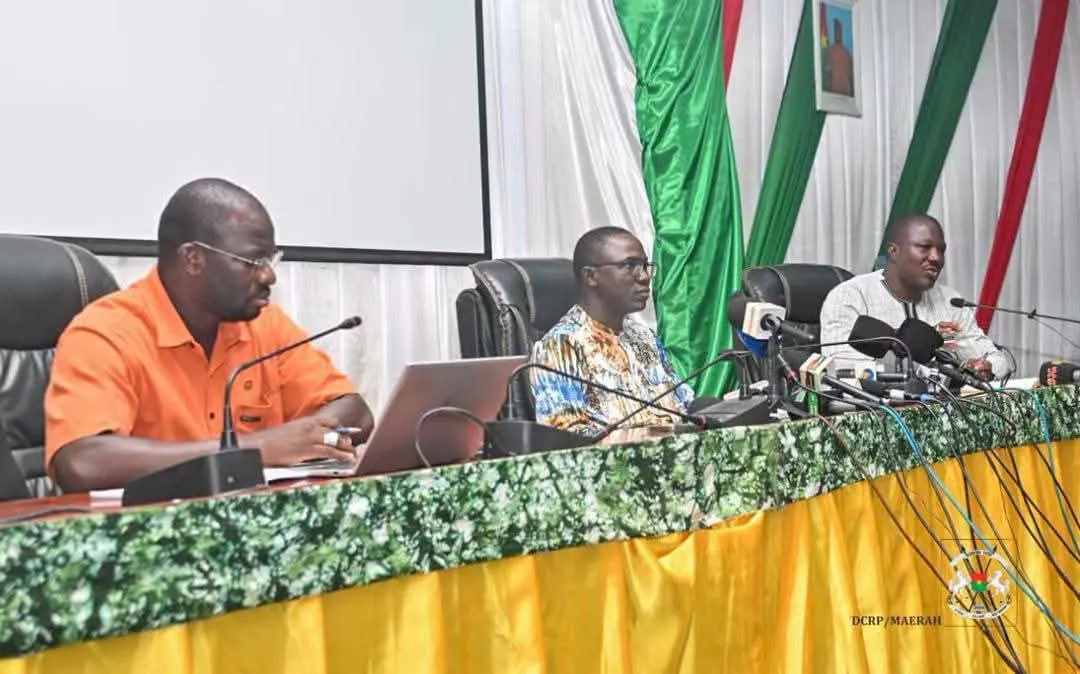
The Burkinabé government has unveiled an emergency plan to mitigate the impact of poor rainfall on agricultural production during the 2026-2027 dry season. On October 8, 2026, the Ministry of Agriculture announced that 750 new boreholes will be constructed to improve access to water for farmers. This initiative aims to support the country's agricultural sector, which has been affected by inadequate rainfall. The plan was presented during a press conference.
According to Oula Damien Ouattara, Director-General of Faso Agropole (SOFA), climate studies suggest that dry episodes may become more frequent in the coming years. To address this challenge, the government is taking proactive measures to ensure the well-being of the population. Burkina Faso has 30,000 hectares of technically exploitable irrigated perimeters, as well as significant potential in terms of surface water, dams, groundwater, and arable land.
The emergency plan involves two main components. Firstly, 750 boreholes will be built and operational by the start of the dry season, with 150 of these located in low-lying areas. These boreholes will be equipped with necessary infrastructure to meet the needs of farmers during the dry season. Secondly, the government aims to reduce dependence on rainfall by developing irrigated perimeters and equipping them with hydromechanical systems designed by local artisans.
The construction of the 750 boreholes is expected to be completed by the end of November 2026. The government will cover the costs of drilling, testing, and equipping the boreholes, including the provision of PVC casing and technical support. Beneficiaries will be responsible for conducting geophysical surveys, acquiring submersible pumps, and installing solar panels and other necessary equipment.
The boreholes are expected to have a minimum flow rate of 5m3/h. To be eligible for the program, applicants must have at least 2 hectares of land under cultivation, possess a land title, and commit to maintaining the borehole. The program is open to individuals and producer organizations. Registration for the program will take place from October 12 to 18, 2026, with results announced on October 22 and drilling set to begin on October 25.
The total cost of the emergency plan is estimated at 254.79 billion FCFA. The government's initiative aims to support farmers and reduce the vulnerability of the agricultural sector to climate-related risks. By investing in water infrastructure, the government hopes to improve agricultural productivity and food security in the country.
The implementation of this emergency plan is expected to have a positive impact on the lives of farmers and the overall agricultural sector in Burkina Faso. With improved access to water, farmers will be better equipped to cope with the challenges of the dry season and maintain their agricultural activities. The program's success will depend on effective implementation and the continued support of farmers and other stakeholders.
Key points
- The Burkinabé government has allocated 254.79 billion FCFA for the construction of 750 boreholes to support agricultural production during the 2026-2027 dry season.
- The program aims to reduce the vulnerability of the agricultural sector to climate-related risks and improve food security in Burkina Faso.
- Beneficiaries will be responsible for conducting geophysical surveys, acquiring submersible pumps, and installing solar panels and other necessary equipment.