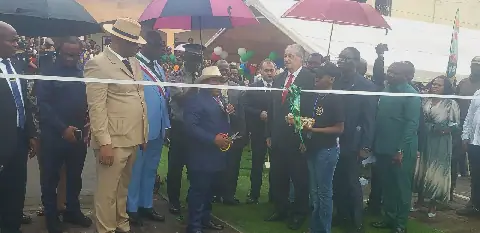
The legislative assembly of Burkina Faso adopted a new law on land reorganization and reform in October 2025, which aims to address the country's land disputes and promote sustainable development. The law, which replaces the 2012 law, seeks to harmonize the legal framework with the country's sovereignty, digitalization, and social justice requirements. A plan of action for its implementation and a communication plan have been developed for 2025-2027.
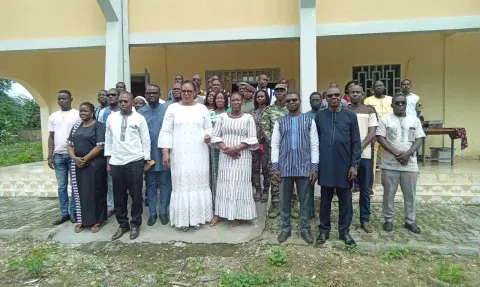
An atelier was held in Manga, the capital of the Nazinon region, on September 24, 2026, to sensitize stakeholders about the new law. The atelier, organized by the Ministry of Economy and Finance, was attended by regional authorities, representatives of deconcentrated and decentralized technical structures, customary and religious authorities, civil society, and the private sector. The objective was to enable an inclusive appropriation of the legislative text by local actors.
The new law, which was promulgated by President Captain Ibrahim Traoré on October 28, 2025, determines the status of national land, sets access rules, and organizes land management. It establishes a national cadastre, computerizes and digitalizes land management tools, and creates a land insurance fund. The law also aims to put an end to land speculation and promote social progress, economic efficiency, and environmental protection.
The President of the regional delegation, represented by Secretary General Ouo Abibata Bamouni, emphasized that land is a matter of peace and that the new law is a tool for social and economic development. She invited participants to be relays in their communities and to encourage populations to work with the government to make land a tool for development, not a source of tension.
According to Alfred Jonas Tondé, a technical support officer at the General Directorate of Territorial Development, the land reform has existed since 1984, with several versions and a law in 2012. The evaluation of the 2012 law revealed insufficiencies and difficulties, which the 2025 law aims to correct. Tondé highlighted the innovation of the new law, which concerns the status of land and the definition of the national land domain.
The stakeholders at the atelier discussed the content of the law, exchanged views, and collected suggestions for its effective implementation. The Ministry of Economy and Finance, with the support of the Project for Support to the Strengthening of Land and Mines Management, organized the regional ateliers to ensure that the new law is well understood and implemented at the local level.
The new land reorganization and reform law is expected to contribute to the country's development and stability by addressing land disputes and promoting sustainable development. Its implementation will require the collaboration of all stakeholders, including local authorities, customary and religious leaders, and the population.
Key points
- The new law aims to put an end to land speculation and promote social progress, economic efficiency, and environmental protection.
- The law establishes a national cadastre, computerizes and digitalizes land management tools, and creates a land insurance fund.
- The stakeholders at the atelier discussed the content of the law and collected suggestions for its effective implementation.