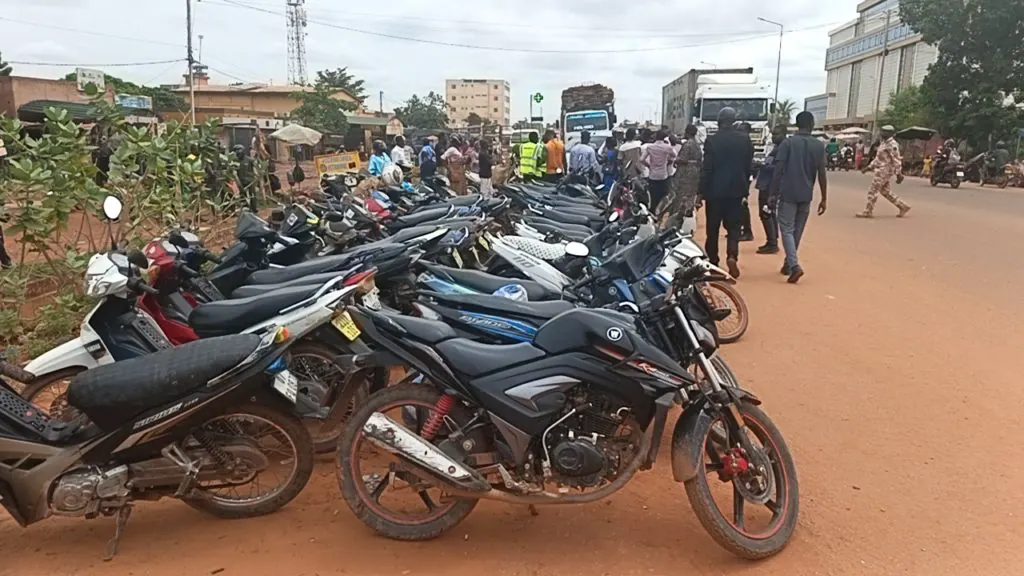
The Burkinabé police have launched a crackdown on drivers of two- and three-wheeled vehicles who fail to wear helmets, as the country enters the repressive phase of its helmet-wearing campaign. On October 5, 2026, the Kadiogo Regional Police Directorate deployed patrols to strategic intersections in Ouagadougou to verify compliance with the mandatory helmet use. This operation follows a sensitization campaign initiated by the Minister of Security.
The enforcement campaign comes after a warning phase, with the government setting October 1, 2026, as the start of sanctions against road users who fail to comply. Police Controller General Abdoulaziz Yonli supervised the operation, ensuring that directives were followed on the ground. The police have been conducting intensive controls for five days, resulting in nearly 3,000 people being stopped in the Kadiogo region for not wearing helmets.
According to the authorities, approximately 1,600 violators were fined, and over 3,561,000 CFA francs in fixed fines were collected for the public treasury. Police Controller General Abdoulaziz Yonli reported that daily data shows a rapid increase in awareness among road users, with around 95% of two- and three-wheeled vehicle drivers now wearing helmets. This development is seen as encouraging.
For now, checks are primarily targeting drivers while educating passengers. However, the national police plan to toughen the device soon. The "Operation Shield, Double Head" initiative will make helmet use mandatory for the second passenger on the vehicle. This move aims to further reduce the number of accidents and increase safety on the roads.
Police Controller General Abdoulaziz Yonli renewed his appeal to all citizens in the capital, emphasizing that wearing a safety helmet is a civic act and an act of patriotism. He encouraged people to make helmet use a habit, stressing that it protects not only the individual but also their family. The police have warned that regular patrols and controls will continue until this safety habit is ingrained in all road users.
The ongoing campaign is part of a broader effort to improve road safety in Burkina Faso. The government has been working to reduce the number of accidents on the country's roads, and the mandatory helmet use is a key component of this strategy. By enforcing this rule, the authorities hope to decrease the number of fatalities and injuries resulting from accidents.
As the campaign continues, road users are advised to comply with the regulations to avoid fines and other penalties. The police will continue to monitor the situation and adjust their strategy as needed to ensure that the campaign is effective in promoting road safety. With the "Operation Shield, Double Head" initiative on the horizon, helmet use is set to become even more widespread in Burkina Faso.
Key points
- Nearly 3,000 people stopped in the Kadiogo region for not wearing helmets
- Around 95% of two- and three-wheeled vehicle drivers now wear helmets
- The "Operation Shield, Double Head" initiative will make helmet use mandatory for the second passenger on the vehicle