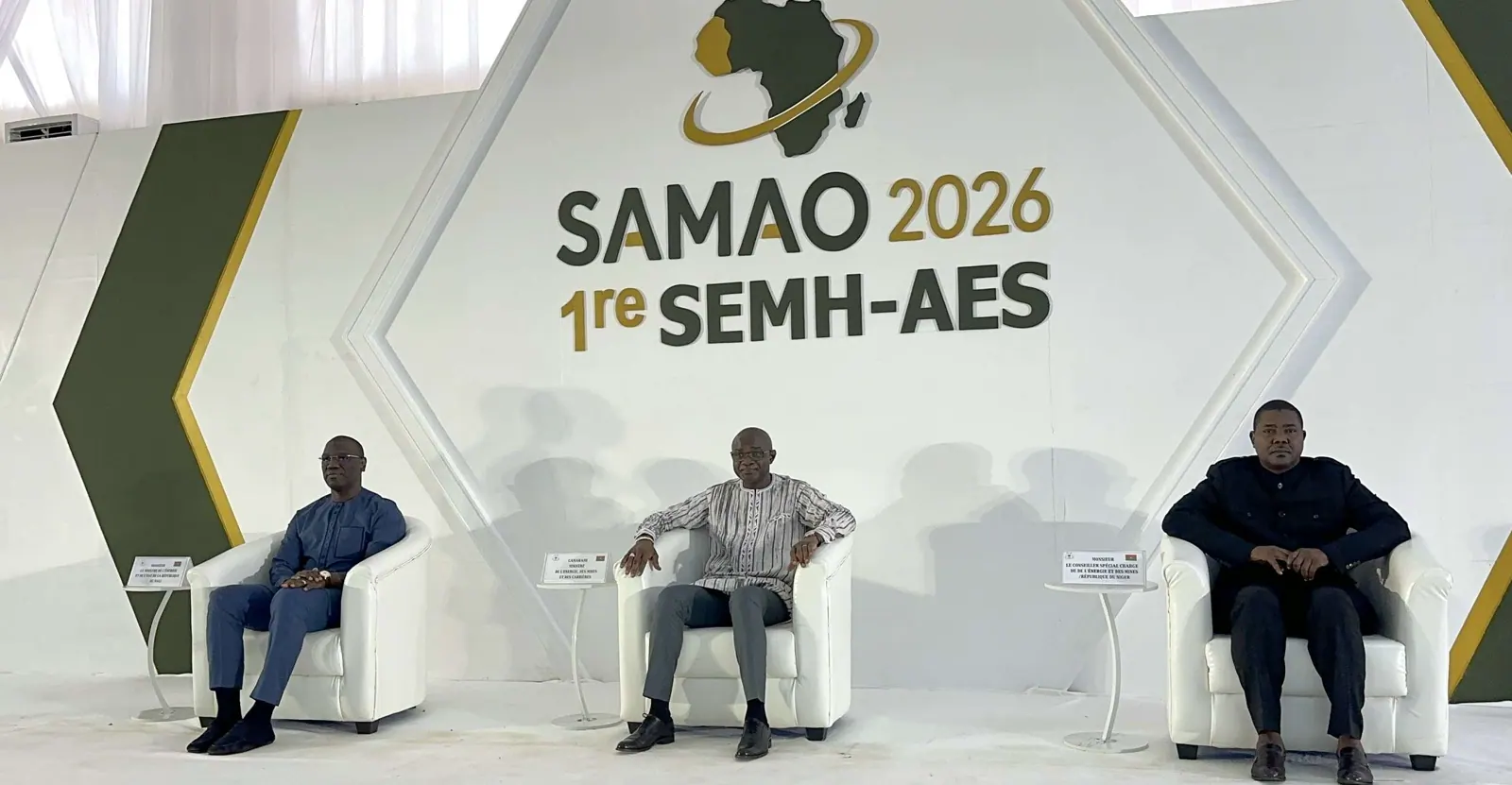
The first edition of the Semaine de l’Énergie, des Mines et des Hydrocarbures de la Confédération des États du Sahel (SEMH-AES) and the 8th edition of the Semaine des Activités Minières d’Afrique de l’Ouest (SAMAO) took place from September 14 to 18, 2026, in Ouagadougou, Burkina Faso. The event gathered around 5,000 participants from 11 countries, featuring seven panels, six ordinary sessions, three technical panels, and four technical sessions. The conference aimed to discuss the governance of extractive resources, focusing on geopolitical issues, challenges, and opportunities for African states.
The closing ceremony was attended by Yacouba Zabré Gouba, Minister of Energy, Mines, and Quarries. He emphasized the need for better control over extractive resources and their transformation for the benefit of local populations. The minister highlighted the importance of moving beyond mere exportation of raw materials, advocating for the creation of competitive industries, technological innovation, research, and the valorization of African expertise. This approach is crucial in the context of the global economy's current transformations, including the energy transition, digital revolution, and green technologies.
The emergence of the Confédération des États du Sahel offers new perspectives for cooperation in energy, mining, and hydrocarbons. According to Minister Gouba, the confederation's member states have made an irreversible choice to regain control over their energy and mining destiny. He considers energy, mining resources, and hydrocarbons as key instruments for industrial power, national security, and endogenous development. This orientation requires an integrated, rigorous, and sovereign governance of extractive resources.
The conference identified several challenges, including economic sovereignty, national capacity building, local content development, environmental protection, and security. Minister Gouba stressed the importance of training engineers, technicians, geologists, and entrepreneurs to strengthen their presence in the extractive value chain. The discussions led to five major recommendations, focusing on controlling geological information, exploiting and valorizing resources for local populations, and reinforcing human capacities.
The participants recommended creating regional centers of excellence, developing joint structuring projects within the AES, and establishing a committee to monitor the recommendations. Minister Gouba emphasized that these conclusions should guide reforms and strengthen cooperation between states. The Burkina Faso government, along with Mali and Niger, aims to build a governance model based on sovereignty, transparency, equity, and fair benefit sharing.
The SEMH-AES and SAMAO meetings concluded with a clear expectation: the translation of established links, partnerships, and commitments into concrete and durable actions. The event demonstrated the importance of effective governance and valorization of extractive resources as a lever for economic transformation and cooperation between states. The recommendations made will serve as a roadmap for future actions and reforms.
In the context of the global demand for strategic resources, Africa holds a significant portion of the world's reserves of critical minerals. Minister Gouba posed a crucial question: how to transform natural wealth into sustainable prosperity for local populations? The answer lies in a rupture with the simple exportation of raw materials and the development of competitive industries. The SEMH-AES and SAMAO have set the stage for a strengthened cooperation and a more sovereign management of extractive resources in the Sahel region.
Key points
- The SEMH-AES and SAMAO conferences called for better control over extractive resources and their transformation for the benefit of local populations.
- The emergence of the Confédération des États du Sahel offers new perspectives for cooperation in energy, mining, and hydrocarbons.
- The conferences led to five major recommendations, focusing on controlling geological information, exploiting and valorizing resources for local populations, and reinforcing human capacities.