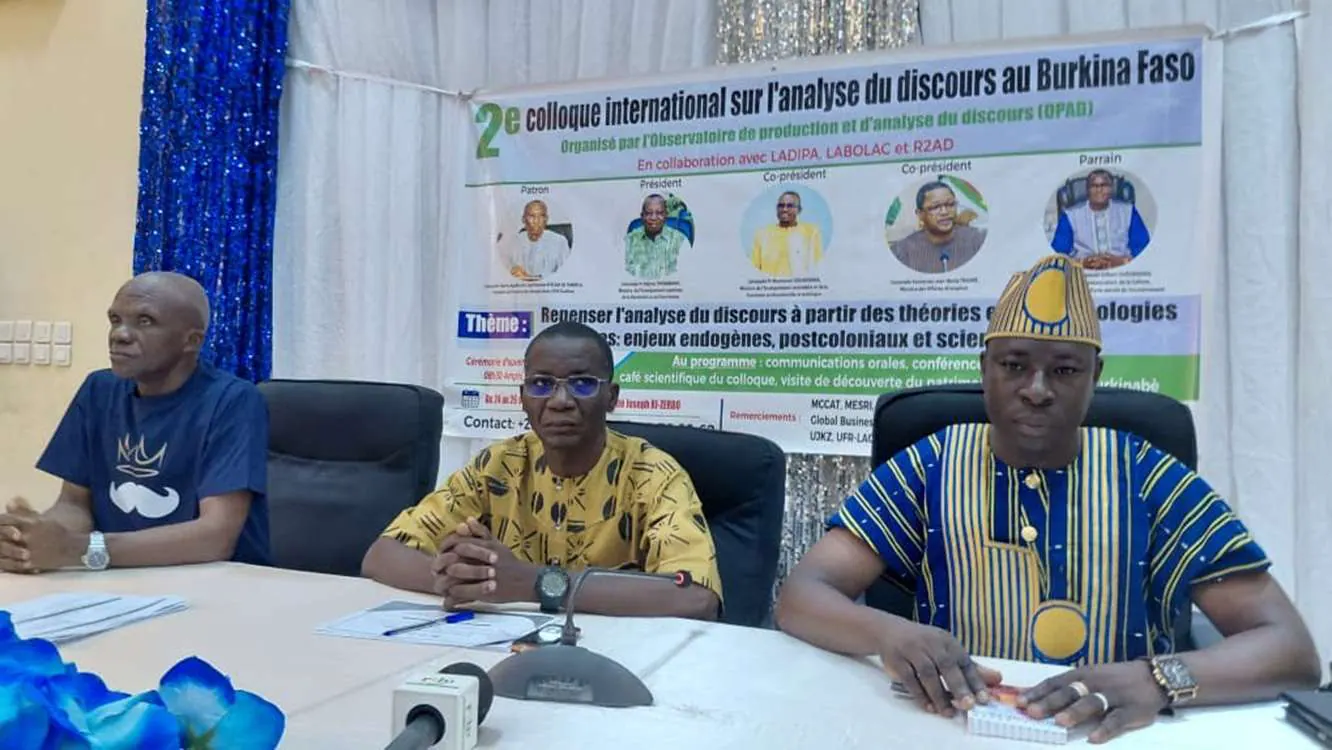
The second international colloquium on discourse analysis in Burkina Faso took place in Ouagadougou from September 24-25, 2026. The event was organized by the Observatoire de production et d’analyse du discours (OPAD), in collaboration with the Laboratoire Langues, Discours et Pratiques Artistiques (LADIPA), the Laboratoire de Recherche en Lettres, Langages, Arts et Communication (LABOLAC), and the Réseau Africain d’Analyse du Discours (R2AD).
The colloquium brought together scholars to discuss the theme "Repenser l’analyse du discours à partir des théories et épistémologies africaines: enjeux endogènes, postcoloniaux et scientifiques" (Rethinking discourse analysis from African theories and epistemologies: endogenous, postcolonial, and scientific issues). The event featured six axes of communication, including foundations of African discourse analysis, current trends in discourse analysis, and ecologization of political, diplomatic, and media discursive processes.
Dr. Boukary Nébié expressed satisfaction with the scientific quality of the colloquium, noting that over 100 communications were presented. He emphasized the importance of African researchers rethinking the theories and methods used in discourse analysis. Nébié called on Africans to move beyond being passive consumers of external products and tools, instead becoming "consom-acteurs" (producers and consumers) of their own discourse analysis tools.
Professor Sidiki Traoré, President of the organizing committee, echoed Nébié's sentiments, inviting Africans to become "consom-acteurs" in discourse analysis. Traoré highlighted the significance of language and the power of words, emphasizing that no word is innocent.
Professor Djédjé Hilaire Bohu presented a communication on the need for an endogenous approach to discourse analysis in African contexts. He stressed the importance of appropriating African history, concepts, tools, and theories, rather than relying on external frameworks. Bohu encouraged participants to consider the cultural competence of their cosmogony and its implications for discourse analysis.
The colloquium featured a range of activities, including thematic conferences, a scientific café, and a visit to Burkinabè tourist attractions. The organizing committee received around 40 articles and invited participants to submit their work for publication. The third colloquium is scheduled for 2028.
The event concluded on a positive note, with participants reflecting on the value of rethinking discourse analysis from an African perspective. The colloquium provided a platform for scholars to share their research and engage in discussions on the future of discourse analysis in Africa.
Key points
- The colloquium focused on rethinking discourse analysis from African theories and epistemologies.
- The event featured over 100 communications and a range of activities, including thematic conferences and a scientific café.
- The organizing committee invited participants to submit their articles for publication and announced plans for a third colloquium in 2028.