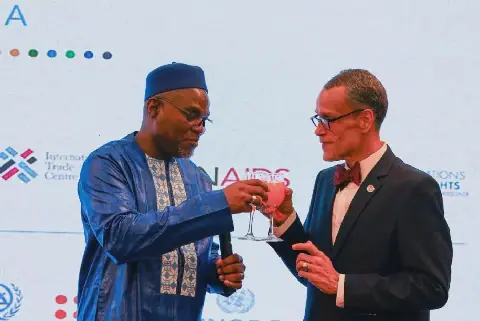
The 9th International Congress of the Burkinabé Society of Cardiology (CICAR Faso) and the 4th International Congress of the Association of Cardiology Societies of West and Central Africa (ASCAOC) kicked off in Ouagadougou on October 28, 2026. The three-day event brings together specialists from several African countries to share experiences and strategies for preventing and managing cardiovascular disease. The congress is themed "Heart and Nutrition" and aims to bridge the gap between scientific knowledge and the realities faced by African populations.
The congress seeks to address the significant challenge of finding solutions that balance medical recommendations, dietary traditions, and financial capacities of households. President of the Burkinabé Society of Cardiology, Professor Nobila Valentin Yaméogo, emphasized the need for concrete proposals that can inform public policies and strengthen awareness actions. He stressed that nutritional advice must be adapted to the daily lives of patients, taking into account their socio-economic realities and dietary traditions.
One of the key concerns discussed at the congress is the excessive consumption of salt, a major risk factor for cardiovascular disease. President of Honor, Professor Faouzi Addad, a Tunisian cardiologist, highlighted that hypertension and obesity are on the rise in Africa, increasing the risk of stroke, coronary disease, and kidney failure. He emphasized the importance of nutritional prevention, particularly in the context of limited access to effective treatments.
The World Health Organization recommends consuming less than five grams of salt per day, but many people exceed this limit, often unintentionally. Professor Addad cited a study that found an average daily salt intake of 11 grams, more than double the recommended amount. He advocated for a comprehensive approach to reducing salt consumption, involving not only medical professionals but also policymakers and food industry stakeholders.
In Tunisia, Professor Addad's team implemented an initiative to gradually reduce salt content in bread, demonstrating the potential for collaboration between healthcare professionals, policymakers, and food industry actors to drive positive change. He encouraged similar efforts in West and Central Africa, particularly with regards to seasoning cubes and bouillons, which often contain high levels of sodium.
However, Professor Addad cautioned that prevention efforts should not focus solely on restrictions, but rather on providing realistic advice that takes into account patients' resources, habits, and health status. He emphasized the importance of tailoring recommendations to individual needs, including blood pressure, weight, diabetes, and kidney function.
The congress also highlights the progress made in Burkinabé cardiology, with Professor Addad expressing his satisfaction with the current state of the field. The event provides a platform for cardiologists, researchers, and healthcare professionals to share knowledge, experiences, and best practices in cardiovascular disease prevention and management.
Key points
- The congress aims to develop concrete proposals to inform public policies and strengthen awareness actions on nutrition and heart health.
- Excessive salt consumption is a major risk factor for cardiovascular disease in Africa.
- The event brings together specialists from across Africa to share experiences and strategies for preventing and managing cardiovascular disease.