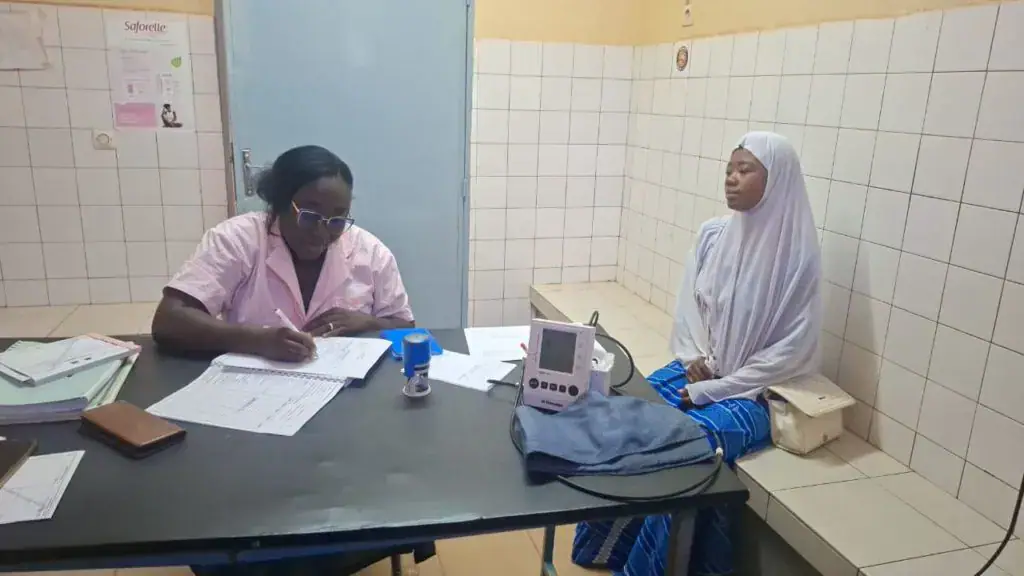
In the Nando region of Burkina Faso, healthcare workers have started using local languages to communicate with patients, improving the quality of care and understanding. At the Kokologo Medical Center, health workers commonly use the Mooré language during consultations and awareness campaigns. This approach has been in practice since the launch of the "Month of Health Communication in National Languages" campaign, which aims to enhance healthcare communication across different regions.
The campaign's press caravan visited the Kokologo Medical Center and Koudougou, highlighting the importance of using local languages in healthcare. According to the district's chief medical officer, using local languages facilitates the work of healthcare providers and patients' understanding. He noted that communicating with patients in their native language has several advantages, including conveying messages more effectively and allowing for more detailed discussions.
Healthcare workers adapt their language to meet the needs of each patient, with Mooré being the predominant language used, followed by Dioula and Fulfuldé. At the maternity ward, midwife Kabore Wéréssé Audrey Raïssa explained that she adjusts her language based on the patient's comfort level. If a patient prefers to communicate in French, she accommodates their request. However, if a patient's French is limited, she switches to their preferred local language.
Patients have expressed appreciation for being treated in their local language, citing better understanding and increased trust. Kabore Fadimata, a patient who visited the center, confirmed that being received in her native language made her feel more at ease and confident. The medical center's team also extends the use of local languages to local radio stations, particularly during the dengue epidemic, to strengthen awareness and connection with the population.
The regional health director, Dr. Kpoda Anicet, praised the initiative, which has enabled healthcare workers to reach out to populations and overcome language barriers. The collaboration with local press organs and radio stations has resulted in approximately 17 radio programs in Mooré, Lyélé, and Lobi, involving 27 specialists. These programs covered essential topics such as nutrition, reproductive health, malaria, and dengue, and reached 1,681,000 listeners.
The programs also generated 252 calls, allowing healthcare workers to address concerns directly. Dr. Kpoda Anicet considers the "Month of Health Communication" a success and advocates for its continuation, possibly twice a year, to sustain its impact. He emphasizes the need for a nationwide campaign to reinforce proximity communication adapted to linguistic and sociocultural realities.
The use of local languages in healthcare communication has shown promising results, and stakeholders are pushing for its continuation. As the campaign continues to reach more regions, it is expected to have a lasting impact on healthcare delivery in Burkina Faso. Key stakeholders are committed to making this initiative a regular occurrence, with the goal of improving healthcare outcomes and increasing patient satisfaction.
Key points
- Health workers in Burkina Faso's Nando region use local languages to improve patient care and understanding.
- The initiative has reached 1,681,000 listeners and generated 252 calls, allowing for direct response to concerns.
- Stakeholders advocate for the continuation of the "Month of Health Communication" campaign to sustain its impact.