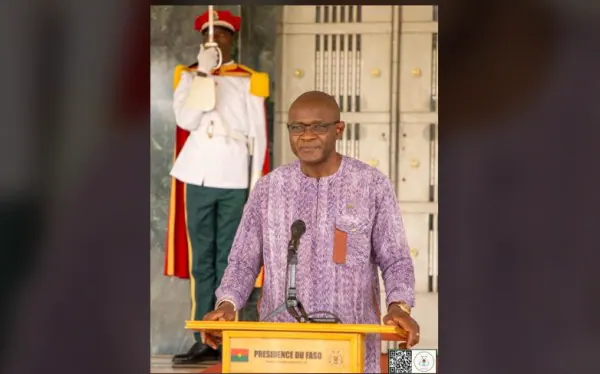
The government of Burkina Faso has launched an initiative aimed at providing universal access to electricity by 2030. The "Faso Wa-Fulu" initiative, which translates to "energy for all" in the local language, was announced by Energy Minister Yacouba Zabré Gouba after a cabinet meeting presided over by Captain Ibrahim Traoré. The program is part of a broader strategy to accelerate energy production and promote industrialization.
The initiative has been allocated over 2,800 billion FCFA (approximately $4.5 billion) for implementation over the next decade. The project is divided into two phases: an acceleration phase to deploy infrastructure and a consolidation phase to sustain the gains made. The government aims to electrify an additional 6,700 localities and connect 3.5 million households and businesses, which translates to nearly 18 million people.
To achieve this ambitious goal, the government has adopted a multi-faceted approach. Four key axes have been identified, including the creation of 44 electrification brigades, known as BRIGEL, comprising 1,208 technicians who will be deployed to work directly in their designated areas. An envelope of 22 billion FCFA has been allocated to support the brigades, which will operate with a high degree of decentralization.
Community participation is also a crucial aspect of the initiative. The government is encouraging local populations to contribute to the project by providing site security, supplying aggregates and local materials, and training for connection works. This approach aims to transform beneficiaries into active participants in the program, working in conjunction with the national electricity company, Sonabel.
The "Faso Wa-Fulu" initiative builds on previous emergency measures, such as the construction of the Pabré power plant, which was completed in just 90 days with a capacity of 50 MW. The program is also aligned with the government's RELANCE plan, which emphasizes the importance of electricity for industrialization. In addition to the electrification initiative, the cabinet has also approved the creation of a new state-owned company, Société Viticole du Burkina (SOVIB), aimed at promoting local wine production.
SOVIB is a mixed-economy company with a majority public stake, established with an initial capital of 1 billion FCFA. The company aims to capitalize on Burkina Faso's viticulture expertise and agricultural potential to reduce the country's dependence on imported wine and spirits. The project is expected to create hundreds of jobs and capture a significant share of the local market.
The government's efforts to promote industrialization and economic sovereignty are evident in its recent series of initiatives, including the creation of TEXFORCES-BF in the textile sector and RAFFINOR-BF in gold refining. The "Faso Wa-Fulu" initiative and the SOVIB project are part of a broader strategy to drive economic growth and improve living standards in Burkina Faso.
Key points
- The "Faso Wa-Fulu" initiative aims to provide universal access to electricity in Burkina Faso by 2030.
- The initiative has been allocated over 2,800 billion FCFA for implementation over the next decade.
- The government aims to electrify an additional 6,700 localities and connect 3.5 million households and businesses.