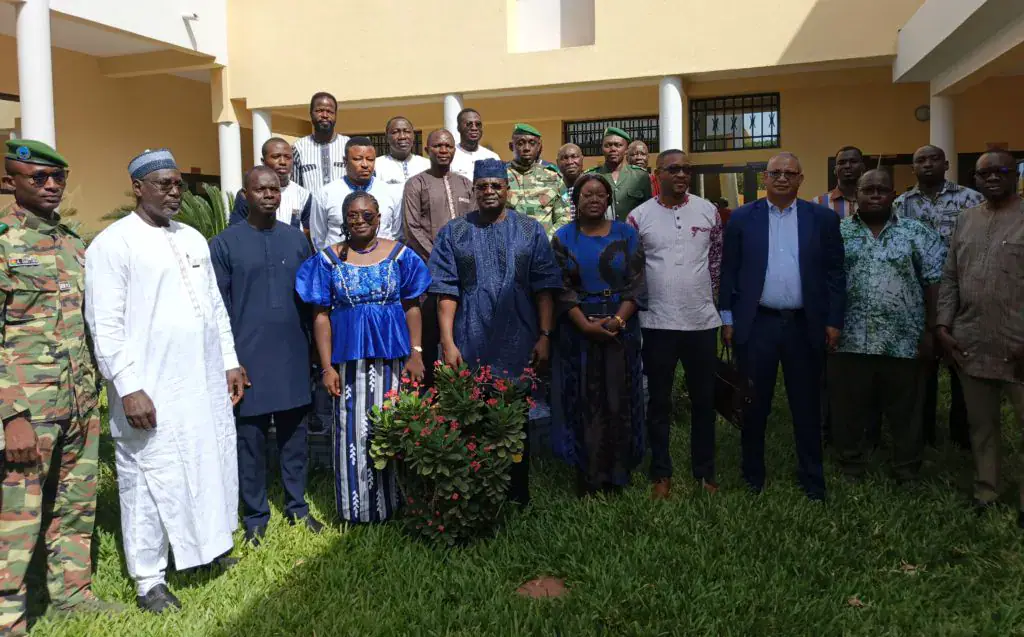
The Centre National d'Etudes Stratégiques (CNES) in Burkina Faso is organizing a two-day session in Ouagadougou from October 28-29, 2026, to discuss the country's climate-peace-security strategy. This initiative aims to operationalize the national security strategy while strengthening dialogue, institutional coordination, and the capacities of stakeholders involved. The meeting is a collaborative effort with the Institute for Security Studies (ISS).
General Barthélémy Simporé, Director-General of CNES, emphasized that security issues in Burkina Faso cannot be addressed in isolation. He noted that economic, social, environmental, and climate dynamics are closely linked and significantly impact the population's living conditions. The Sahel region faces rising temperatures, irregular rainfall, droughts, floods, land degradation, and natural resource depletion, exacerbating existing economic difficulties, insecurity, and governance challenges.
According to General Simporé, climate change is not a direct cause of conflict but can amplify tensions when combined with existing vulnerabilities such as competition for natural resources, fragile conflict regulation mechanisms, and limited access to livelihoods. This can lead to social cohesion fragility, which terrorist groups may exploit. In turn, insecurity can hinder environmental protection, land restoration, and climate change adaptation initiatives.
General Simporé stressed the need for a coordinated approach to address climate, peace, and security issues, moving beyond sectoral approaches to develop coherent and adaptive responses. He highlighted that Burkina Faso adopted its National Climate Security Strategy 2025-2029 in July 2025, demonstrating a political commitment to integrating climate and environmental considerations into peace, security, and development policies.
The strategy's implementation requires appropriation by relevant stakeholders, translation into operational programs, and resource mobilization. General Simporé called for collective responsibility in converging contributions around a shared vision and clearly defined priorities. He identified interinstitutional coordination, data sharing, capacity building, risk anticipation, and financing mobilization as essential levers for the strategy's effectiveness.
Rodrigue Koné, ISS Project Manager for the Sahel, acknowledged the significant challenge climate change poses to Sahel stability and development. He praised Burkina Faso's adoption of its national climate security strategy, positioning the country as a leader in implementing and sharing its experience with neighboring countries. However, Koné emphasized that strategy development is just the starting point, and translating it into concrete actions through better institutional coordination and effective information sharing is crucial.
The meeting aims to identify obstacles to strategy implementation, assess actor needs, and propose realistic and concrete action plans. Koné expressed confidence that the most effective responses must be constructed with Burkina Faso's institutions, considering the country's context and priorities defined by the state.
Key points
- The Government of Burkina Faso has adopted a strategy to address climate change and its impacts on peace and security.
- The strategy aims to strengthen coordination among stakeholders and enhance the country's resilience to climate-related challenges.
- The implementation of the strategy requires effective coordination, resource mobilization, and capacity building among relevant stakeholders.