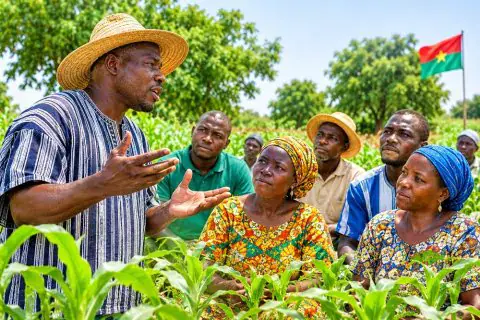
Researchers at the Institut des Sciences des Sociétés (INSS) in Burkina Faso have found that many farmers in the country are practicing agroecology, although they may not use that term. Techniques such as zaï, cordons pierreux, and composting are being used to nourish the soil rather than deplete it. These practices are part of a broader approach to agriculture that relies on natural processes and local resources.
The Burkina Faso government has taken steps to support agroecology, adopting a National Strategy for Agroecology Development (SND-AE) in 2023. The strategy aims to promote sustainable agriculture practices and reduce reliance on chemical fertilizers and pesticides. However, despite this progress, the adoption of agroecological practices remains limited. Researchers are seeking to understand the challenges and opportunities for scaling up agroecology in the country.
A study conducted by INSS researchers between 2022 and 2025 found that many farmers in Burkina Faso are already practicing agroecology. The study, which surveyed 203 farmers and conducted 54 interviews, found that nearly 80% of farmers use cordons pierreux, while two-thirds use manure or compost. These practices are often combined with traditional knowledge, such as observing rainfall patterns and soil conditions to inform agricultural decisions.
The study also highlighted the importance of farmer organizations, such as the Association Minim Sông Pânga du Burkina Faso (AMSP-Burkina), in promoting agroecology. The AMSP-Burkina works with farmers to test and adapt new techniques, such as using biopesticides and compost. By serving as a bridge between farmers, researchers, and policymakers, the organization helps to facilitate the adoption of sustainable agriculture practices.
One of the key findings of the study is that farmers' knowledge and practices are not static. Rather, they are dynamic and adaptive, incorporating new ideas and techniques while building on traditional knowledge. This process of "endogénéisation" allows farmers to take ownership of new practices and make them their own. As a result, agroecology is not seen as something new or imposed, but rather as a continuation of existing practices.
The researchers also noted that the use of local terminology, such as "Koglezang-koobo" in the Mooré language, can help to promote agroecology. By using language that is meaningful to farmers and communities, agroecology can be made more accessible and relevant. This approach can help to build support and momentum for sustainable agriculture practices in Burkina Faso.
Overall, the study highlights the critical role that farmers and their organizations can play in promoting agroecology in Burkina Faso. By leveraging indigenous knowledge, local resources, and advocacy efforts, farmers can help to drive the adoption of sustainable agriculture practices and improve food security in the country. Key initiatives, such as the AMSP-Burkina, are essential for facilitating this process and ensuring that agroecology continues to grow and evolve in Burkina Faso.
Key points
- Farmers in Burkina Faso are using advocacy to promote agroecology and sustainable agriculture practices.
- The country's National Strategy for Agroecology Development aims to reduce reliance on chemical fertilizers and pesticides.
- Farmer organizations, such as the Association Minim Sông Pânga du Burkina Faso, play a critical role in promoting agroecology and facilitating its adoption.