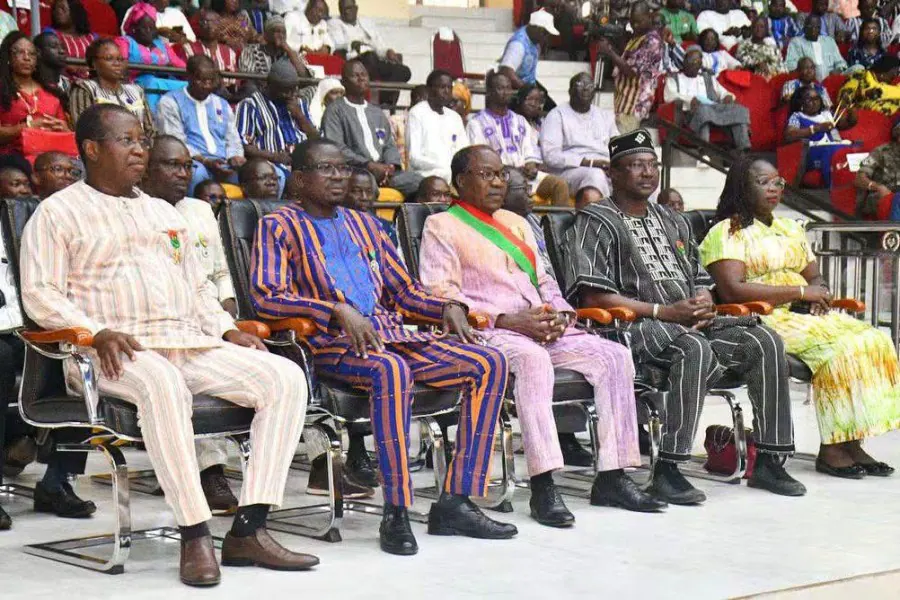
On October 6, Burkina Faso's Minister of Secondary Education and Technical Training, Moumouni Zoungrana, announced that the country's education system has successfully eliminated vestiges of colonialism. This statement was made during a ceremony in Ouagadougou, where 850 educators were honored for their contributions to the sector. The event marked the World Teachers' Day, an occasion to acknowledge the dedication of teaching professionals.
According to Minister Zoungrana, the government's efforts aim to create an education system that reflects and unites the nation, based on endogenous values. This initiative aligns with the progressive revolution led by President Ibrahim Traoré, who has prioritized education in the country's policy agenda. The minister emphasized the need for continuous development and improvement of the national education system.
During the ceremony, eight educators were elevated to the rank of officer, while 842 others received the rank of knight in the Order of Academic Palms. This national distinction recognizes individuals who have rendered exceptional services in education, science, and culture. The Order of Academic Palms is a prestigious honor in Burkina Faso, symbolizing excellence and commitment to the country's educational development.
In a related development, Niger's President Abdourahamane Tiani recently highlighted the importance of youth development, both nationally and regionally. He called upon the Alliance of Sahel States (AES), comprising Niger, Mali, Burkina Faso, Togo, and Chad, to focus on nurturing a responsible generation. This emphasis on youth education and development resonates with Burkina Faso's efforts to revamp its education system.
The Alliance of Sahel States was established to promote cooperation and development among its member countries. By prioritizing education and youth development, these nations aim to create a brighter future for their populations. Burkina Faso's recent achievements in education reform reflect its commitment to this shared vision.
The reform of Burkina Faso's education system is part of a broader effort to assert national sovereignty and cultural identity. By distancing itself from colonial legacies, the country seeks to create an education system that is tailored to its specific needs and values. This approach is expected to have a lasting impact on the country's human capital development.
As Burkina Faso continues to implement its education reform, the international community is watching closely. The country's efforts to create a more inclusive and relevant education system may serve as a model for other nations in the region. With the support of its educators and the broader community, Burkina Faso is poised to make significant strides in education and national development.
Key points
- Minister Moumouni Zoungrana announced the eradication of colonial remnants in Burkina Faso's education system.
- The government aims to create an education system reflecting and uniting the nation, based on endogenous values.
- 850 educators were honored during the World Teachers' Day ceremony in Ouagadougou.