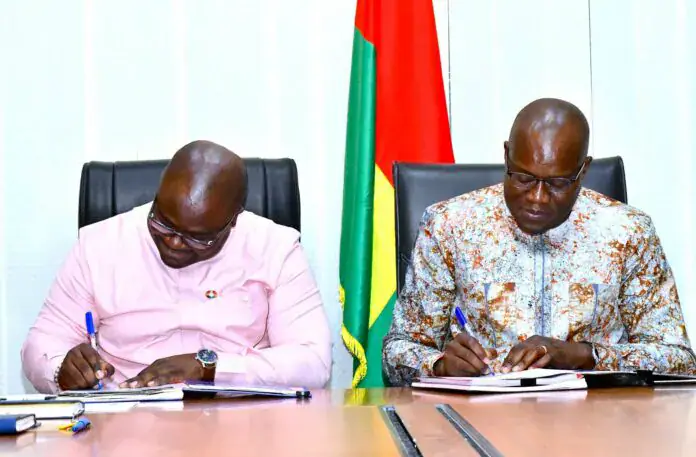
The government of Burkina Faso and the United Nations have signed a new cooperation plan, the Plan-cadre de coopération pour le développement Durable 2027-2030. This plan was signed by Dr Aboubakar Nacanabo, Minister of Economy and Finance, and Njoya Tikum, Resident Coordinator of the United Nations and Humanitarian Coordinator. The plan outlines strategic orientations for cooperation over the next four years, respecting Burkina Faso's national sovereignty and development priorities.
The new cooperation plan aims to promote endogenous, resilient, inclusive, and sustainable development. It aligns with Burkina Faso's national ambitions for peace, social cohesion, and improved living conditions. The plan also supports the implementation of the 2030 Agenda, the African Union's Agenda 2063, and the Pact for the Future. This cooperation is based on three transformative programs agreed upon by both parties to drive structural changes and achieve concrete results.
The implementation of the plan will be led by the Burkinabè government, with the UN agencies, funds, and programs providing operational support. The cooperation documents will be developed under the government's leadership, ensuring alignment with Burkina Faso's sovereign orientations as outlined in the Plan Relance. This approach aims to ensure that the cooperation is effective and responds to the country's specific needs.
The signing of the cooperation plan reaffirms the commitment of both parties to a partnership based on shared responsibility, mutual respect, and effectiveness. The ultimate goal is to achieve tangible results that benefit the people of Burkina Faso. This cooperation plan is expected to have a positive impact on the country's development trajectory.
The cooperation plan focuses on driving structural changes and achieving concrete results through three transformative programs. These programs are expected to contribute to improved living conditions, peace, and social cohesion in Burkina Faso. The plan's implementation will be monitored and evaluated to ensure its effectiveness.
The Resident Coordinator of the United Nations, Njoya Tikum, emphasized the importance of this cooperation plan in supporting Burkina Faso's development priorities. The plan is expected to contribute to the country's efforts to achieve sustainable and inclusive development. The Burkinabè government has expressed its commitment to working closely with the UN to implement the plan.
The new cooperation plan between Burkina Faso and the UN marks a significant step in their partnership. It reflects a shared commitment to achieving tangible results and promoting sustainable development in Burkina Faso. The plan's implementation is expected to have a positive impact on the lives of the Burkinabè people.
Key points
- The cooperation plan focuses on national development priorities, including peace, social cohesion, and improved living conditions.