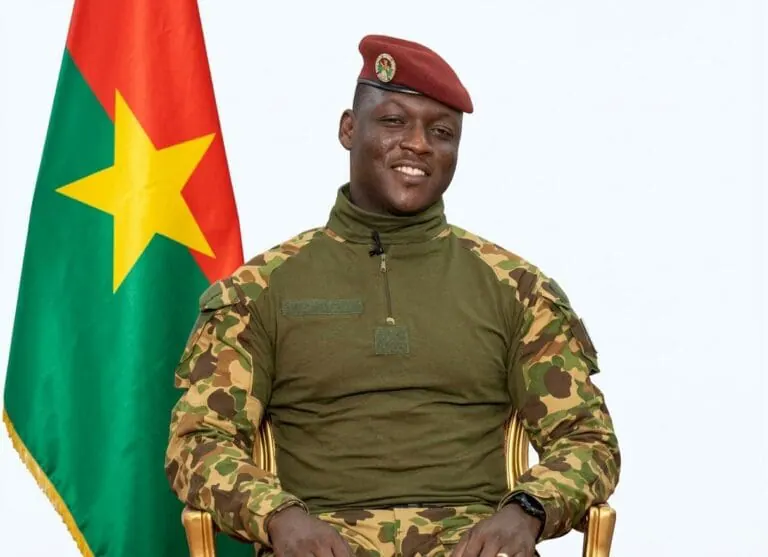
On September 28, Captain Ibrahim Traoré, the leader of Burkina Faso's transitional government, shared his vision for the country's future diplomatic relations with France. Traoré emphasized that traditional cooperation between the two nations is no longer viable. He stressed that for any dialogue to be meaningful, Burkina Faso must first achieve a sufficient level of autonomy and strategic consolidation in key sectors. This would enable the country to negotiate from a position of strength.
Traoré's conditions for renewed diplomatic engagement with France reflect a desire for a more balanced relationship. He cited the historical struggles of the Haitian people and encouraged African nations to learn from the past when addressing contemporary geopolitical challenges. The Captain's emphasis on national sovereignty and strategic autonomy signals a shift in Burkina Faso's approach to international relations. This new approach prioritizes respect for the country's sovereignty and decision-making capacity.
The current state of relations between Burkina Faso and the European Union is characterized by a cautious dialogue. While the dialogue is not severed, it is subject to strict guidelines. The Burkinabè government has reacted strongly to certain resolutions adopted by the European Parliament, which it perceives as intrusive in national affairs. The government demands the annulment of these resolutions.
Burkina Faso's diplomatic approach has become more assertive under Traoré's leadership. The country's diplomacy now adheres to a strict doctrine: any collaboration must be based on mutual respect for national sovereignty, without pressure or interference. This stance reflects the government's determination to protect its interests and decision-making capacity.
The prospects for renewed diplomatic relations between Ouagadougou and Paris depend on the implementation of Traoré's conditions. A return to traditional cooperation is not being considered; instead, a new framework for engagement is being envisioned. This framework would prioritize Burkina Faso's autonomy and strategic interests.
Traoré's remarks on the importance of national sovereignty and strategic autonomy resonate with many African nations. His call for African countries to draw lessons from historical experiences and approach contemporary challenges with lucidity has been noted. The Captain's vision for Burkina Faso's international relations reflects a desire for a more equitable and respectful engagement.
The evolution of Burkina Faso's diplomatic relations with France and the European Union will be closely watched. The country's commitment to defending its sovereignty and interests is clear. As Traoré's government continues to navigate international relations, its approach will likely have implications for the region and the continent.
Key points
- Captain Ibrahim Traoré sets conditions for diplomatic dialogue with France, prioritizing national sovereignty and strategic autonomy.
- Burkina Faso seeks a more balanced relationship with France and the European Union, based on mutual respect and non-interference.
- The country's diplomatic approach reflects a determination to protect its interests and decision-making capacity.