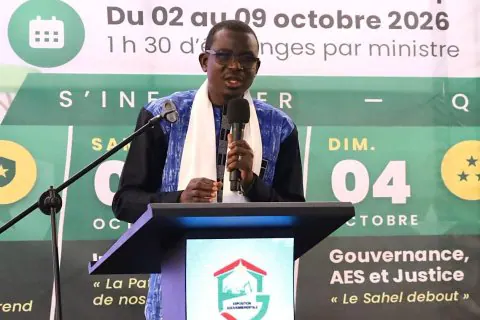
The Burkinabé government has set an ambitious goal to reform the country's education system, aiming to produce "new Burkinabé" citizens who are patriotic, competent, and capable of meeting the country's immediate needs. According to the Minister of Secondary Education and Technical and Professional Training, Pr Moumouni Zoungrana, the current education system prioritizes theoretical knowledge over practical skills, which needs to change. The ministry's plan focuses on transforming the education system into a "matrix" for national development.
One of the major challenges identified by the ministry is the dominance of general education in the country's education system. Currently, only about 5% of graduates come from technical or professional education, while the goal is to increase this proportion to 60% by 2050. To achieve this, the ministry will focus on promoting scientific education, strengthening professional training, and adapting the school map to the university map. This shift is driven by the country's growing need for technical skills, particularly in the industrial sector.
The ministry plans to open several specialized high schools, including those focused on agriculture, leather and skin treatment, fruit and vegetable processing, construction materials, and fashion design. These schools will be located in different regions, ensuring that education is more closely tied to local economic potential. For example, agricultural schools will be established in Bagré, Samandéni, and Gomponsom, while a school for leather and skin treatment will be set up in Kaya.
Another key initiative is the development of a comprehensive directory of 2,250 professions covering priority sectors for Burkina Faso's development. According to Pr Zoungrana, this work is complete, and the listed professions will be linked to training references and curricula to enable the education system to better respond to labor market needs and national economic priorities.
The ministry has also launched a program to retrain university graduates, with the first cohort consisting of 260 beneficiaries who will acquire new skills in areas that better match the economy's needs. Additionally, initiatives such as the "Useful Vacations with Students" program and introduction to professions in schools aim to engage students in practical skills development.
The transformation of the education system is closely tied to Burkina Faso's industrialization drive. The growth of scientific and technical education is expected to provide the country with the human resources needed to support new industrial units, maintain equipment, and reduce reliance on external expertise. This vision is part of a broader effort to make education an instrument of national sovereignty.
The ministry also emphasizes the importance of civic and moral education, as well as patriotic training. This year, 119,717 people benefited from civic and patriotic training in institutions under the ministry's jurisdiction. The reform also prioritizes promoting girls' education in scientific disciplines and rewarding teachers who contribute to their students' success.
Key points
- The Burkinabé government aims to increase the proportion of technical and professional graduates to 60% by 2050.
- The education ministry plans to open specialized high schools focused on areas such as agriculture, leather and skin treatment, and construction materials.
- A comprehensive directory of 2,250 professions has been developed to link training programs to labor market needs and national economic priorities.