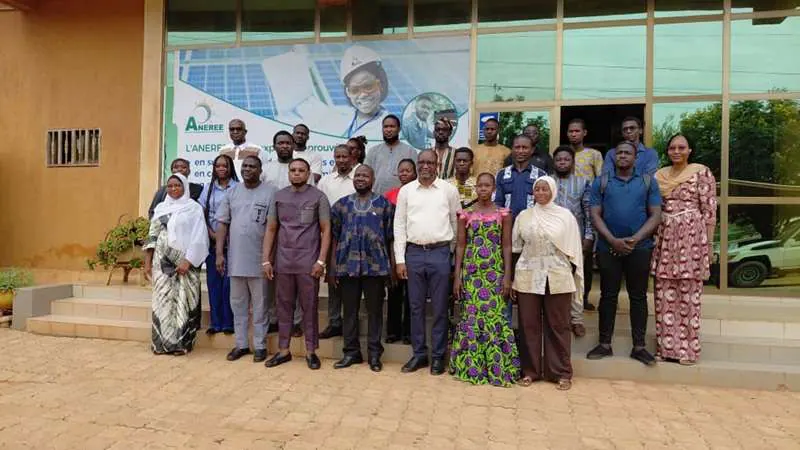
The Faso Vêenem Agency, in collaboration with the Burkinabé Agency for Standardization, Metrology, and Quality (ABNORM), has organized two workshops to popularize national norms for mini-grid solar systems. The first workshop took place on September 29, 2026, in Ouagadougou, with around 30 private sector actors in attendance. The event aims to enhance participants' understanding of applicable norms for solar photovoltaic mini-grid components and installations.
The workshops are part of the implementation of the National Program "Africa Minigrids Program" (PN-AMP). Mohamed Sarba, head of standardization at ABNORM, emphasized that the growth of solar photovoltaic mini-grids must be accompanied by quality and durability requirements. He stated that norms define applicable requirements for equipment used in these installations, ensuring the reliability, performance, and durability of mini-grid solar components.
The objective of the workshops is to bring norms closer to field actors, according to Sarba. This involves educating actors on how to use and apply the norms, ensuring that they become practical tools for the sector. The domestication of norms for the Burkinabè context is a crucial step in this process. Rodrigue Ouédraogo, representing the director general of the Faso Vêenem Agency, recalled the agency's role in implementing the national rural electrification policy.
The PN-AMP, housed within the Faso Vêenem Agency, aims to improve access to modern, quality, and affordable energy services for populations. The project supported the development and domestication of norms adapted to the Burkinabè context, with technical assistance from ABNORM. A total of 11 norms have been domesticated to ensure the quality of works carried out under mini-grid solar photovoltaic systems.
The workshops also cover the national standardization system and the role and missions of ABNORM. Participants include actors from the private sector, scientists, laboratories, researchers, study bureaus, manufacturers, and importers. The events aim to promote the appropriation and effective application of norms by sector actors.
According to Ouédraogo, the domesticated norms are considered endogenous, as they have been adapted to the local context. The norms are expected to contribute to guaranteeing the quality of mini-grid solar systems and ensuring their reliability, performance, and durability.
The workshops will also take place in Bobo-Dioulasso, providing an opportunity for more actors to engage with the norms and their application. The initiative is expected to enhance the quality and sustainability of mini-grid solar systems in Burkina Faso, ultimately improving access to energy for local populations.
Key points
- Eleven norms have been domesticated for the Burkinabè context to ensure the quality of mini-grid solar systems.